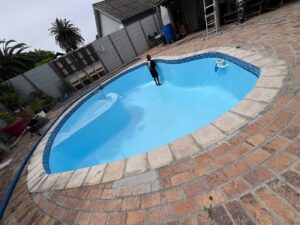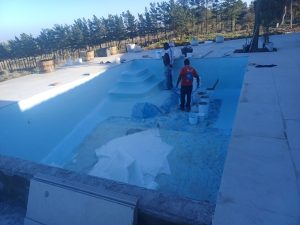
When a pool surface fails you have a genuine choice to make, and the wrong one costs you twice. Fibreglass relining, marbelite resurfacing and vinyl liners all solve the same problem differently. Here is how they compare on a South African pool.
Pool liner vs fibreglass relining: the core difference
A vinyl liner is a manufactured sheet hung inside the shell. Fibreglass relining bonds a new structural surface to the shell itself. That distinction drives everything else: lifespan, repairability, appearance and price.
Fibreglass relining: bonded, seamless and structural
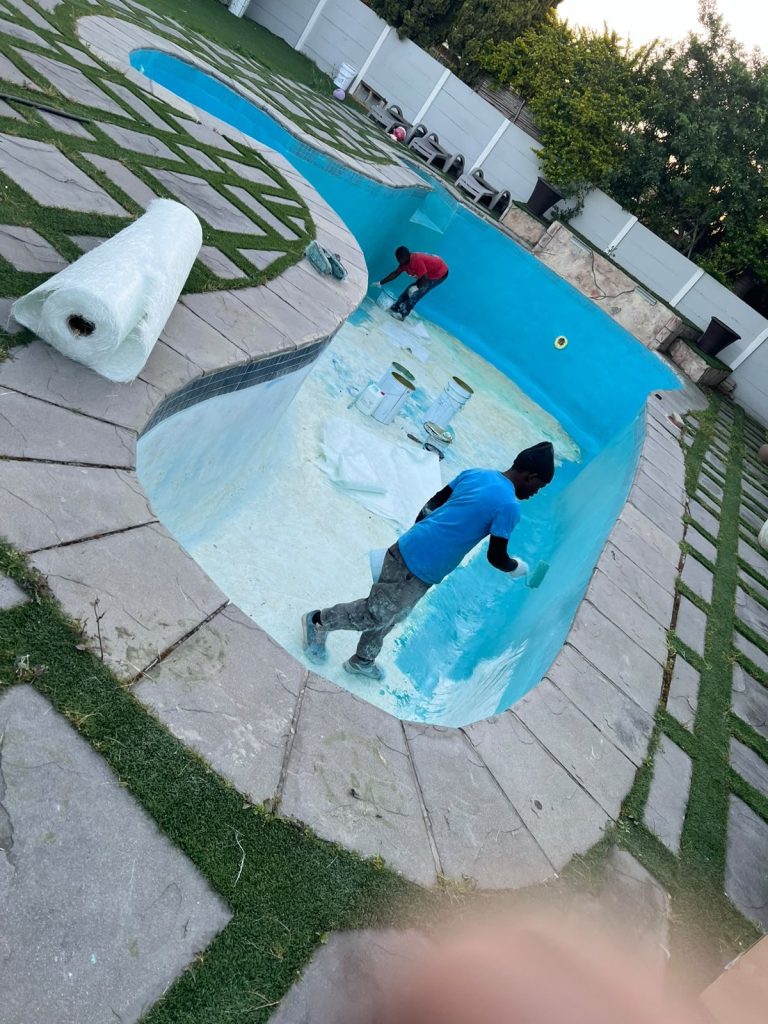
Fibreglass matting and resin are applied directly to the prepared shell, then finished in gelcoat. The result is seamless, watertight and adds strength to the structure. It works on gunite, concrete and failed fibreglass alike, which is why it is our most requested job. Expect 15 to 20 years. See it done on a 10m x 5m Kuilsriver pool.
Vinyl pool liners: cheaper upfront, shorter life
A liner is quick to install and cheapest at the outset. It is also the most vulnerable: sharp objects puncture it, Cape UV degrades it, and when it fails you replace the whole sheet rather than repairing a patch. Liners are uncommon on older Cape Town pools for exactly this reason.
Marbelite resurfacing: traditional and honest on a sound shell
A cement-based plaster finish, well suited to a structurally sound shell where the owner wants the classic look. It is porous, so it needs more disciplined water chemistry, and it roughens with age. Compare the costs in marbelite versus fibreglass.
Pool liner vs fibreglass on cost over time
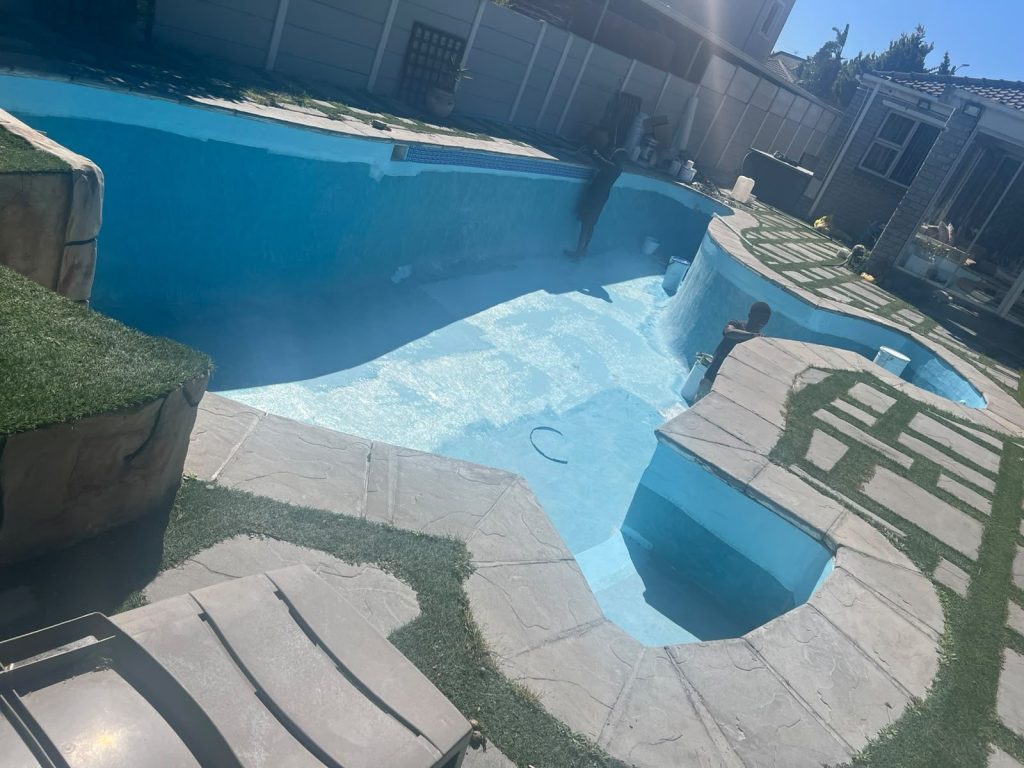
Upfront, a liner is cheapest and fibreglass costs more. Over fifteen years the order reverses, because a liner will have been replaced two or three times in the period a single fibreglass reline is still under guarantee. Our published fibreglass figures are real: R47,983 for the 10m x 5m Kuilsriver conversion, R54,000 to R60,000 for an 8m x 4m reline, R27,900 for a 6m x 3m. See project prices.
Which pool surface suits a Cape Town pool?
For most Cape Town pools, fibreglass relining is the right answer. It handles UV, it seals a cracked gunite shell, it is smooth underfoot, and it does not need repainting. Marbelite remains a legitimate choice on a sound shell for owners who want the traditional finish. Vinyl liners make sense mainly on pools originally built for them.
Pool liner vs fibreglass: frequently asked questions
Is fibreglass relining better than a pool liner?
For most South African pools, yes. Fibreglass bonds to the shell, is seamless, adds structural strength and lasts 15 to 20 years. A vinyl liner is cheaper upfront but is puncture-prone, degrades under Cape UV, and must be replaced whole rather than repaired.
How much does fibreglass relining cost compared to a liner?
Fibreglass costs more upfront. Our published figures are R27,900 for a 6m x 3m pool, R47,983 for a 10m x 5m gunite conversion and R54,000 to R60,000 for an 8m x 4m reline. Over fifteen years fibreglass usually works out cheaper because a liner gets replaced repeatedly.
Can you put fibreglass over an old gunite or concrete pool?
Yes, and it is one of the most common jobs we do. The old surface is stripped and prepared, cracks are repaired, then fibreglass is applied across floor, walls and steps.
How long does a fibreglass pool lining last?
15 to 20 years with minimal maintenance when the preparation is done properly. Ours carry a 10 year guarantee.
What is the difference between marbelite and fibreglass?
Marbelite is a cement-based plaster that is porous and roughens with age, needing disciplined water chemistry. Fibreglass is a sealed, non-porous bonded surface that stays smooth and resists staining. Marbelite suits a sound shell and a traditional look.
Which pool surface is best for a Cape Town pool?
Fibreglass relining suits most Cape Town pools because it handles strong UV, seals cracked gunite shells and needs no repainting. Coastal pools benefit particularly, since the sealed surface resists salt and staining.
Can a damaged fibreglass pool surface be repaired?
Yes. Isolated cracks and chips are repairable. When fibreglass is lifting across whole panels or the shell is crazed throughout, a full reline is the honest recommendation.
Choosing a pool surface with honest advice
We quote the option that suits your shell, not the one with the biggest invoice. Read pebble versus fibreglass finishes, see the relining process, or browse pool relining in Cape Town.
Call / WhatsApp a photo of your pool for a free quote: 069 955 1310
Email: info@gibbspools.co.za
10 Year Guarantee