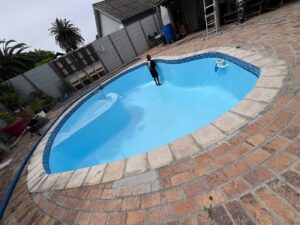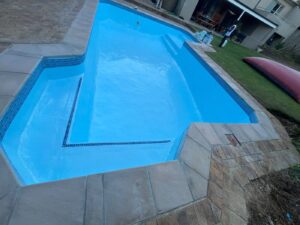
When a pool surface reaches end of life — and they all do — the owner faces the pool surface types question: marbelite again, convert to fibreglass, or the vinyl option the internet keeps mentioning? Each choice sets your pool’s feel, chemistry and maintenance for the next fifteen-plus years. Here is the South African comparison, from a team that applies two of the three weekly and will tell you honestly why the third barely features here.
Pool surface types at a glance:
- Marbelite: the SA classic — mineral finish, cost-effective, 10–20 years, needs disciplined water balance
- Fibreglass lining: smooth, low-chemical, watertight — higher upfront, decades of service
- Vinyl liner: common overseas, niche in SA — soft feel, shorter replacement cycles, few local specialists
Marbelite: the surface Cape Town grew up in
Marbelite (marble-dust plaster) built the South African pool aesthetic: that textured mineral feel, the classic blues, the sparkle. Its economics remain compelling — on a sound shell it is the cost-effective resurface — and its weaknesses are known: porous with age, stain-adoptive, hungry for correct water balance, and mortal at 10–20 years depending on care. Colour choice matters more than owners expect; our marbelite colours guide covers how each ages in our sun.
Fibreglass lining: the modern conversion
A fibreglass lining laminated over the existing shell is the direction most of our resurfacing traffic flows: glass-smooth underfoot, dramatically gentler on chemicals, algae-resistant (nothing roots in it), and — the sleeper benefit on older gunite — a watertight skin over a shell that may have started weeping. It costs more than marbelite upfront; our published projects put real numbers on it (R54 000 – R60 000 for the documented 8m x 4m reline). Applied properly — and preparation is everything, as our Monte Vista rescue of a failed cheap lining shows — it is a decades-long surface.
Vinyl liners: the honest word
Vinyl-lined pools dominate parts of America and Europe; in South Africa they are a niche — and that thin ecosystem is itself the argument. Liners feel pleasant and install fast, but they puncture, fade and replace on 8–12 year cycles, and local specialist support is sparse compared to the marbelite/fibreglass trades. For an existing SA pool, converting to vinyl rarely makes sense; for the few existing vinyl pools out there, we service the surrounding systems and advise honestly on conversion when the liner next dies.
Choosing between the real two
- Budget-led, shell sound and dry: marbelite — the honest saving;
- Older shell, weeping history, chemical fatigue: fibreglass conversion — surface and waterproofing in one;
- Low-maintenance priority (holiday homes, busy families, salt systems): fibreglass — it simply asks less of you;
- Classic look non-negotiable: marbelite, with the water-care discipline that keeps it beautiful.
We quote both paths with physical samples at every free assessment — and the full processes live on our relining page and marbelite resurfacing page. Shell condition usually makes the decision clearer than expected.
Frequently asked questions
Which pool surface lasts longest?
A properly-prepared fibreglass lining, typically — decades against marbelite’s 10–20 years. Preparation quality moves both numbers more than material choice.
Can I change surface type at resurfacing time?
Yes — marbelite-to-fibreglass is the most common conversion in our diary; the reverse is possible but rare for good reasons.
Which surface is best for salt chlorinators?
Fibreglass pairs best — smooth, non-reactive, easy on the cell. Salt on aged porous marbelite amplifies its weaknesses.
Does surface choice change my pool’s value?
A fresh surface of either type transforms saleability — buyers price rough pools hard (see our buying-a-home checklist). The type matters less than the condition.