What a Fibreglass Pool Relining Lifespan Really Means
The typical fibreglass pool relining lifespan in Cape Town runs from 15 to well over 20 years when the work is done properly and the surface is looked after. That is a long time for any pool finish, and it is one of the main reasons homeowners across the Western Cape choose fibreglass over cheaper, shorter-lived options. A good reline is not just a fresh coat of colour — it is a fully bonded structural shell that seals the pool, waterproofs hairline cracks, and gives you a smooth, non-porous surface that resists algae and staining for years on end.
Understanding what drives that lifespan up or down helps you protect the investment. A reline that is rushed, applied over poor preparation, or neglected afterwards can start failing in as little as five to seven years. One that is installed correctly and maintained sensibly will comfortably outlast marbelite and most painted finishes, which is exactly why we treat surface preparation as the most important stage of every job.
Key Takeaways
- A quality fibreglass pool relining lifespan is 15–20+ years in the Cape climate.
- Preparation quality, water chemistry, and sun exposure are the three biggest factors.
- Coastal pools near the sea wear faster and may need attention a few years sooner.
- Balanced water and gentle cleaning can add several years to the finish.
- Re-coating a fibreglass shell is far cheaper than a full rebuild when the time comes.
The Factors That Decide How Long Your Reline Lasts
No two pools age at the same rate, because no two pools face the same conditions. The fibreglass pool relining lifespan you actually get depends on a handful of factors that either protect the surface or slowly break it down. The table below sets out the biggest ones and how each pulls the lifespan up or down, so you can see where a little care makes the most difference.
| Factor | Effect on lifespan | What you can do |
|---|---|---|
| Surface preparation | Biggest single factor — poor prep can halve it | Insist on proper grinding and crack repair before coating |
| Water chemistry | Aggressive or acidic water dulls and erodes the gelcoat | Keep pH and chlorine balanced year-round |
| Sun and UV exposure | Fades colour and chalks the surface over time | Use a pool cover and shade where possible |
| Coastal salt air | Speeds up wear on seaside pools | Rinse and service more often near the coast |
| Cleaning habits | Harsh brushing and acid washing shorten it | Use soft brushes and avoid unnecessary acid washing |
Why Preparation Beats Everything Else
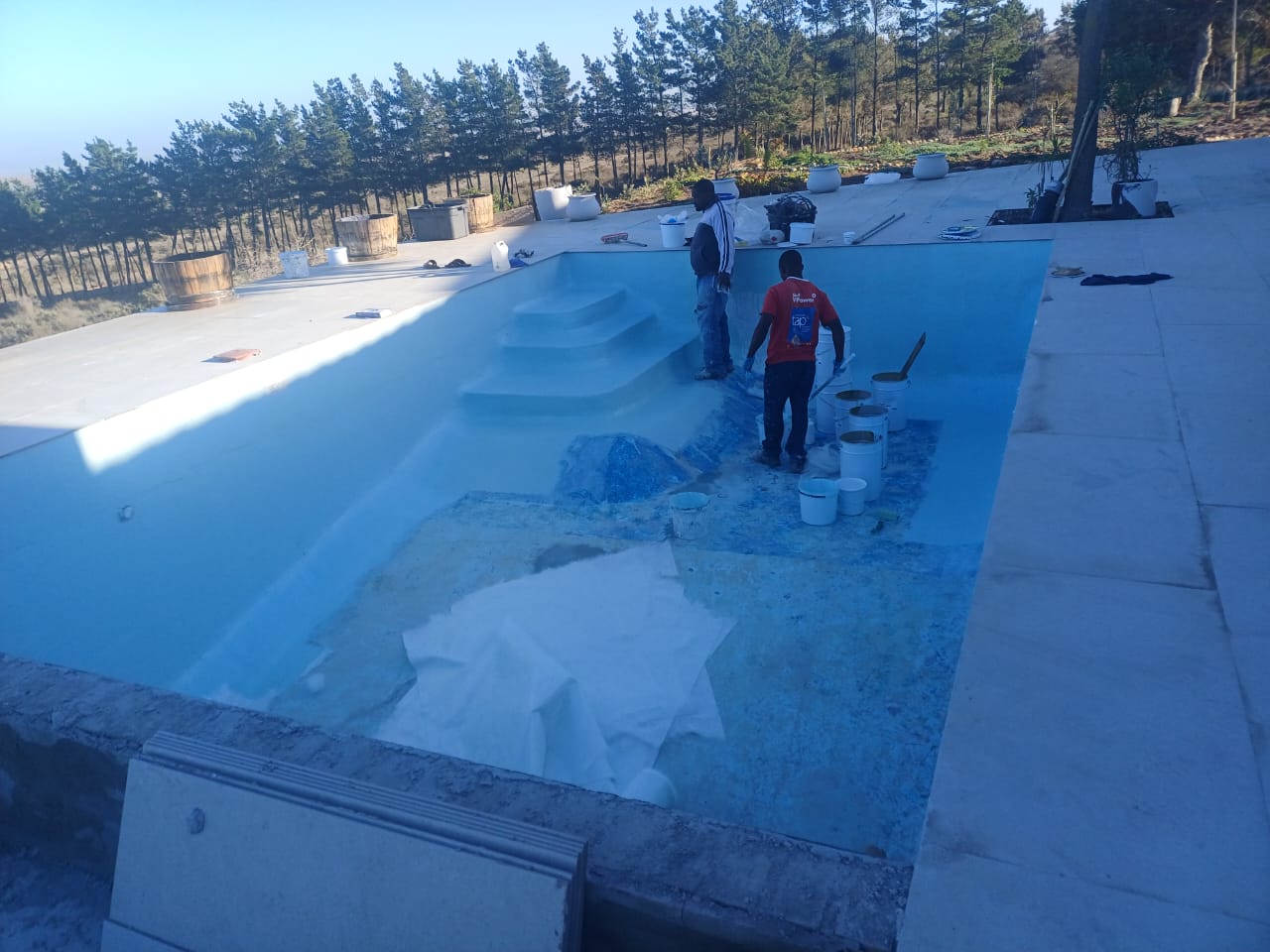
If there is one thing that decides whether you get seven years or twenty, it is what happens before the resin ever goes on. The old surface has to be ground back, cracks have to be opened and repaired, and the shell has to be clean and dry so the new layers bond as one. When we quote a job we spend real time on this stage, because a beautiful finish laid over a weak base will lift, blister, and fail early no matter how good the top coat looks on day one. This is the same discipline covered in our guide to relining a concrete pool with fibreglass.
How Cape Town’s Water and Weather Play a Part
The Western Cape gives pools a hard time in ways that are easy to underestimate. Long, dry summers mean intense UV and high evaporation, which concentrates salts and minerals in the water and pushes chemistry out of balance faster. Winter brings heavy rain that dilutes and swings pH the other way. A surface that rides these swings without balanced water will chalk and lose its gloss years earlier than one that is kept steady, so routine care genuinely translates into extra years of life.
Warning Signs Your Reline Is Reaching the End
A fibreglass finish rarely fails overnight. It tells you it is tiring through a series of small signs that build up over months. Catching them early often means a straightforward re-coat rather than a bigger repair, so it pays to know what to look for during your regular pool checks.
- A chalky, powdery residue on your hand after touching the surface.
- Colour that has faded unevenly or gone patchy, especially on the sunny side.
- Rough or fibrous patches where the gelcoat has worn through to the matting.
- Persistent staining or algae that keeps coming back despite balanced water.
- Slow, unexplained water loss that points to hairline cracks in the shell.
If several of these show up together, the surface is near the end of its service life and it is worth getting a professional opinion. Comparing your options early also helps you budget — our breakdown of marbelite versus fibreglass resurfacing costs is a useful starting point, and the full pool relining cost breakdown shows what to expect by pool size.
How to Extend Your Fibreglass Pool Relining Lifespan
The good news is that a long fibreglass pool relining lifespan is mostly within your control. Balanced water is the single most valuable habit — keeping pH between roughly 7.2 and 7.6 and chlorine steady protects the gelcoat from slow chemical erosion. Beyond that, gentle cleaning with a soft brush, running the filtration long enough each day, and using a cover to cut UV and evaporation all add up. According to the fibre-reinforced plastic principles the finish is built on, it is chemical stability and surface protection that keep the material performing, not aggressive scrubbing. When you do reach the end of the road, a fibreglass shell can usually be re-coated rather than rebuilt, which keeps future costs down.
Frequently Asked Questions
How long does a fibreglass pool reline last on average?
In the Cape climate a properly installed fibreglass reline lasts around 15 to 20 years, and often longer when the water is kept balanced and the surface is cleaned gently. Poor preparation or neglect can cut that dramatically, which is why installation quality matters so much.
Does living near the coast shorten the lifespan?
Yes, seaside pools in areas like Melkbosstrand and Table View tend to wear a little faster because of salt air and wind-blown sand. With slightly more frequent servicing you can still get many years of life, but coastal pools often reline a few years sooner than inland ones.
Can I extend the life of my existing reline?
Absolutely. Keeping your water chemistry balanced, brushing with a soft brush, running your filter properly, and using a pool cover all protect the gelcoat and can add several years. If you are unsure where to start, get a relining assessment from our team and we will tell you honestly how much life your surface has left.