After years of repair call-outs from Blouberg to Gordon’s Bay, we can tell you that Cape Town pools break in remarkably predictable ways. The same eight problems account for the overwhelming majority of our diary — and for each one there is a symptom you can spot early, a cause you can understand, and a fix that costs far less when booked sooner. Consider this the field guide we would hand every pool owner in the city.
The quick reference table
| Symptom | Most likely cause | Fix category |
|---|---|---|
| Water level drops more than ~3cm a week | Leak in plumbing, fittings or shell | Leak detection & repair |
| Green water that keeps returning | Failing filtration or porous surface | Filter repair / resurfacing |
| Sand on the pool floor | Cracked filter lateral | Filter repair |
| Pump screeching, humming or tripping | Bearings, capacitor or seal | Pump repair |
| Rough walls that scuff skin | Marbelite at end of life | Resurfacing / relining |
| Stains that will not brush off | Metals or algae rooted in porous surface | Treatment or resurfacing |
| Blisters or peeling in fibreglass | Lining failure (usually prep-related) | Relining |
| Weak return flow, poor skimming | Air leak, blocked line or worn pump | Plumbing / pump repair |
1. The disappearing water
Every pool loses something to evaporation — more in our wind — but the bucket test settles fact versus physics in 24 hours: bucket on the step, mark both levels, pump off, compare tomorrow. Pool losing meaningfully more than the bucket means a leak, and leaks never get cheaper with age: they erode backfill, undermine paving and can stress the shell itself. Modern leak detection is non-invasive — pressure testing per line, dye testing at fittings — and turns “somewhere under the garden” into “this joint, right here”. One Cape-specific flag worth repeating: a pool whose level drops during our rainy winter is leaking, guaranteed.
2. The pump that announces its retirement
Pumps rarely die silently — they screech (bearings), hum without starting (capacitor), weep from the shaft (seal) or trip the DB (motor windings getting wet or tired). Every one of those is cheaper the week it starts. The repair-first rule applies: bearings, seals and capacitors are modest jobs that buy years; we quote repair versus replace honestly, because a pump pushed to seizure takes options off the table.
3. Sand where sand should not be
Sand appearing on the pool floor near the return jets means a cracked lateral inside the sand filter — the slotted fingers at the tank base go brittle with age. It is a contained, very fixable fault, but ignore it and the escaping sand sandblasts pump internals on every cycle. If the filter is opened for a lateral, replacing a tired sand bed at the same time is the economical move.
4. The surface that fights back
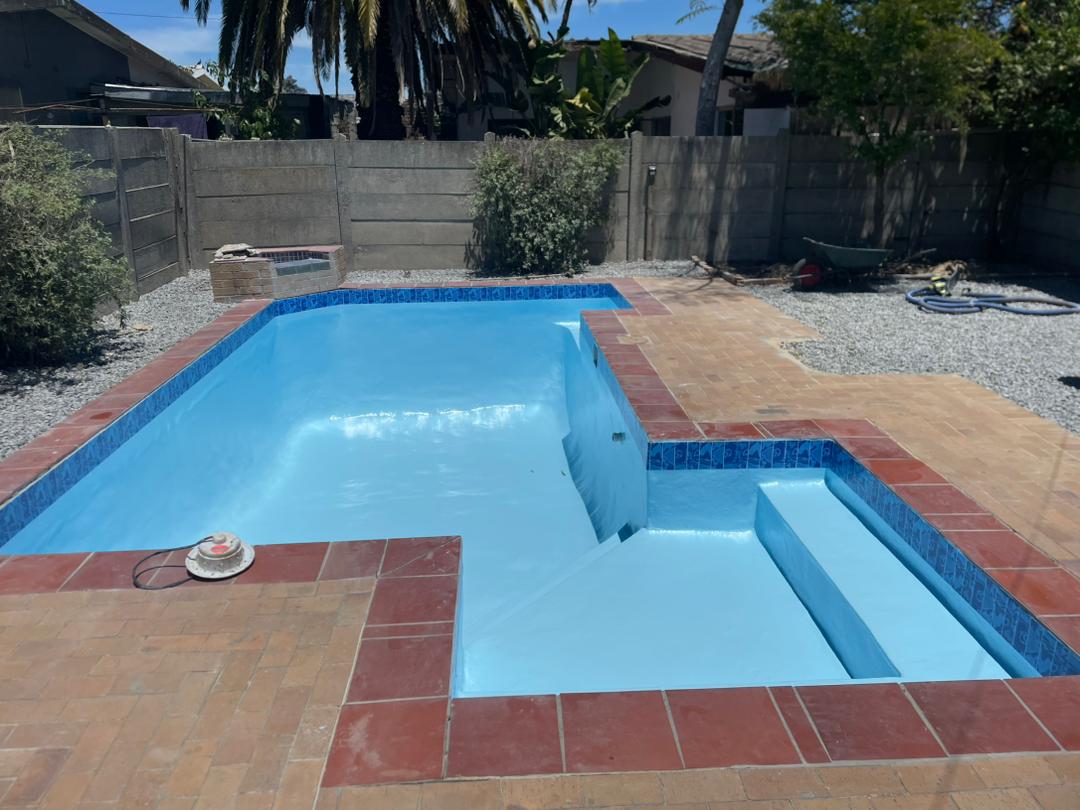
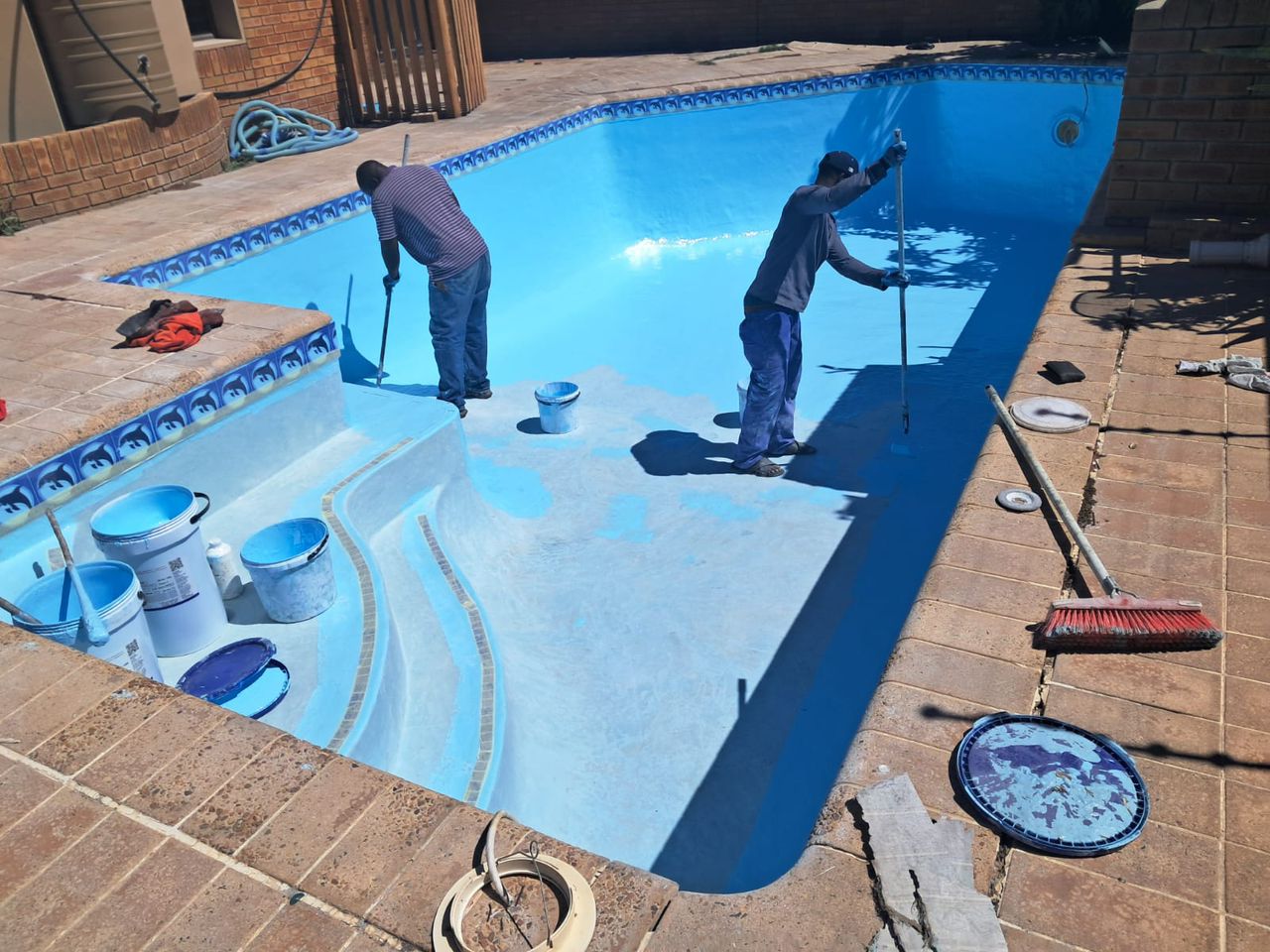
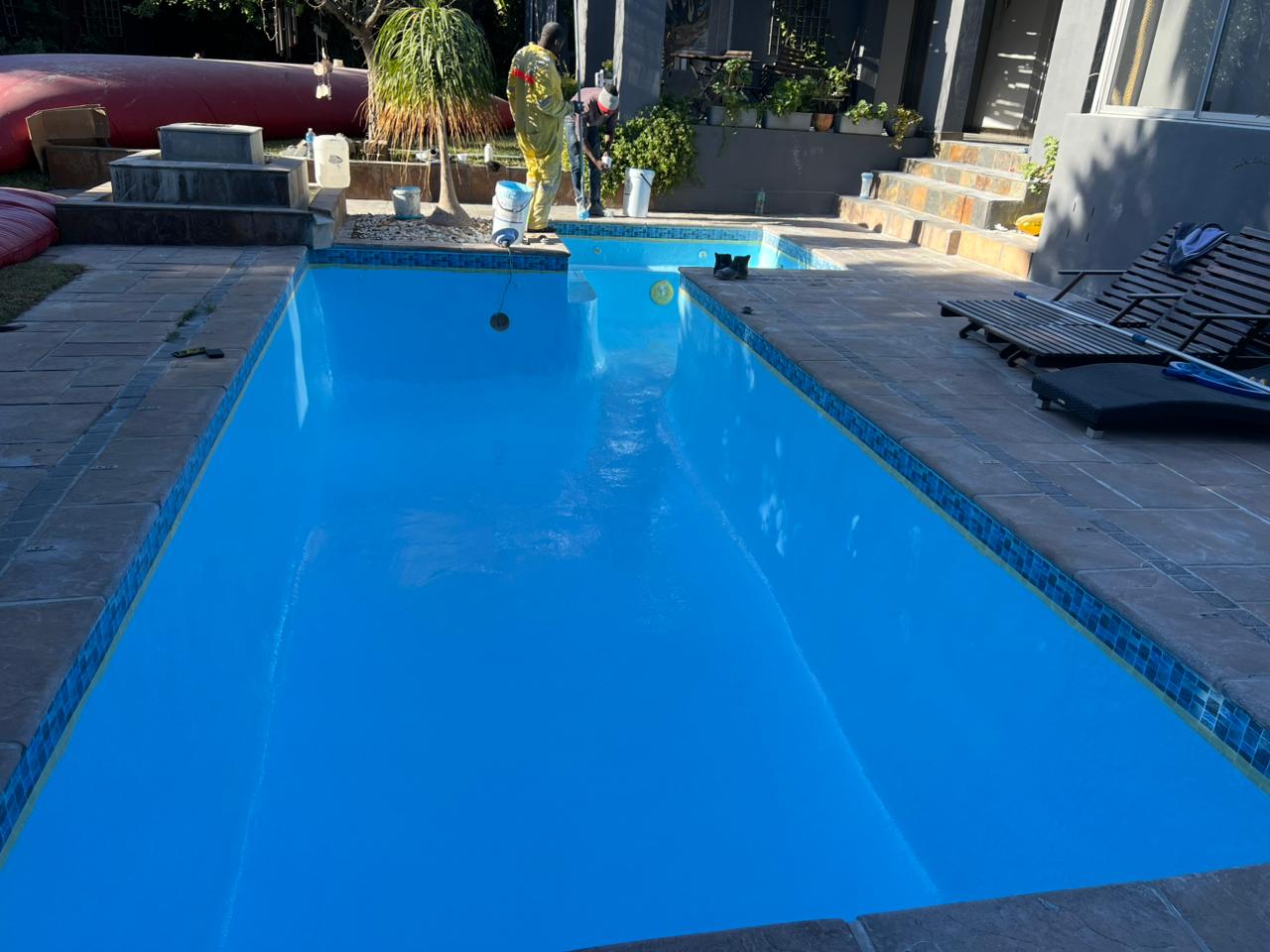
Cape Town’s huge stock of older marbelite and first-generation fibreglass pools makes this our signature problem family: walls gone rough as sandpaper, stains that laugh at brushing, black algae returning to the same spots every summer, blisters spreading through a lining. These are all the same story at different chapters — a surface at end of life — and no chemical subscription rewrites it. The honest fix is resurfacing or relining, and it is a better-value decision than most owners expect: our published case studies show full 8m x 4m fibreglass relines at R54 000–R60 000, photographed at every stage, with the pool performing like new for decades after.
5. The problems that hunt in packs
One pattern from thousands of call-outs: mature pools rarely have one fault. The leak dilutes chemistry, so algae gets a foothold in the surface the chemistry was protecting; the struggling filter recycles the algae; the starved pump wears fast. Fixing only the loudest symptom is why some pools see three contractors in a year. Our assessments deliberately check the whole system — water, surface, circulation, plumbing, equipment — and produce one written plan with prices, worst-first. That is the thinking behind our Cape Town repairs hub, and the assessment itself is free: book it here or call 069 955 1310.
Frequently asked questions
What is the most common problem you fix in Cape Town?
Leaks and end-of-life surfaces, in a near tie — both products of the city’s large stock of older pools. Pump repairs are the most frequent small job.
Which problems are emergencies?
Fast water loss (structural risk), a pump running dry (hours from seizure), and any electrical fault. Everything else is urgent in proportion to how long it is ignored.
Can I diagnose my own pool with this guide?
The table gets you to the right category reliably — that alone prevents the classic mistake of treating a filtration fault with chemicals. Confirmation and repair specifics are what the free assessment is for.
Are older Cape Town pools worth fixing at all?
Almost always — the old gunite shells under most of them are structurally excellent. A reline plus honest equipment work delivers a near-new pool for a fraction of replacement cost.