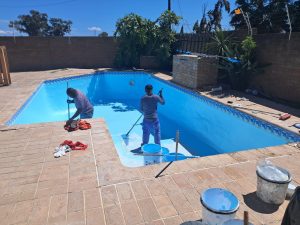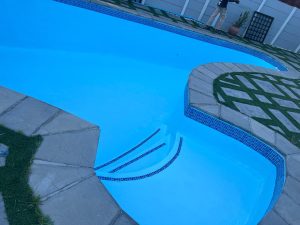
Pool surface staining is a detective story: the colour tells you the culprit, the culprit dictates the cure, and guessing wrong wastes both chemicals and patience. Cape Town pools collect stains from borehole metals, mountain tannins and ageing surfaces — here is how to read yours and what actually removes it.
Read the stain by colour:
- Tea-brown / rust: iron — borehole top-ups are the usual source
- Blue-green-black on surfaces: copper — algaecide history or corroding elements
- Brown-tan under leaves: organic tannins — the leafy-suburb classic
- Black spots that regrow: black algae rooted in a porous surface
Metal staining: the borehole signature
Iron and copper dissolve invisibly in your water until a chlorine shock or pH swing oxidises them onto the surface — often overnight, often right after you thought you were doing the right thing. Removal uses targeted stain treatments and sequestrant chemistry, not scrubbing; and prevention means treating metal-bearing fill water before it enters the pool. If your pool tops up from a borehole, this is almost certainly your story.
Organic pool surface staining
Leaves, seeds and jacaranda flowers dropped by a Cape winter storm stain fast — but organic marks are the good news of the staining world: chlorine and brushing lift most of them, and enzyme or ascorbic treatments handle the stubborn shadows. The real fix is upstream: nets, covers and a working skimmer during the drop months.
When pool surface staining means the surface is done
Here is the honest threshold every pool owner should know: smooth surfaces release stains; porous surfaces adopt them. A marbelite or fibreglass finish in good condition gives stains up to proper treatment. A rough, aged surface lets metals and algae anchor deep — treatments fade the stain, weeks pass, the stain returns. That cycle is the surface itself talking, and the answer is restoration, not another treatment cycle:
- Stains recolonise the same patches within weeks of every treatment;
- The surface feels like sandpaper where the stains live;
- Black algae returns each summer no matter the dosing;
- Chemical appetite has climbed for seasons.
Two or more of those and the money conversation moves to relining or resurfacing — where staining leaves with the layer it lives in.
Removing stains without wrecking the surface
- Identify first — a vitamin C tablet held on a stain lightens iron instantly; chlorine tab lightens organics: two thirty-second tests that pick your treatment;
- Treat locally before globally — spot treatments beat drum-dosing the whole pool;
- Never acid-wash casually — it strips a layer of surface with the stain and ages marbelite years per wash; it is a once-in-a-surface-life tool, professionally handled;
- Rebalance after any treatment — stain chemistry pushes pH and sanitiser around.
Not sure which stain you own? Send photos or book the free assessment — identification on site takes minutes, and if the honest answer is the surface, you will get real published benchmarks (see our repairs hub) rather than another bottle.
Frequently asked questions
Will stains come back after resurfacing?
Only if the source persists — treat borehole fill water and manage leaf-load, and a new smooth surface stays clean dramatically longer.
Can I use household chemicals on pool stains?
No — supermarket acids and bleaches wreck water balance and can etch surfaces. Pool-specific treatments cost little more and behave predictably.
Why did my whole pool turn tea-coloured overnight?
Oxidised iron after a shock or big borehole top-up — dramatic but treatable, and preventable with sequestrant when you know your water carries metals.
Are stains harmful to swimmers?
Generally cosmetic — but black algae signals sanitation losing, and metal staining signals water chemistry worth correcting. The pool is talking; worth listening.