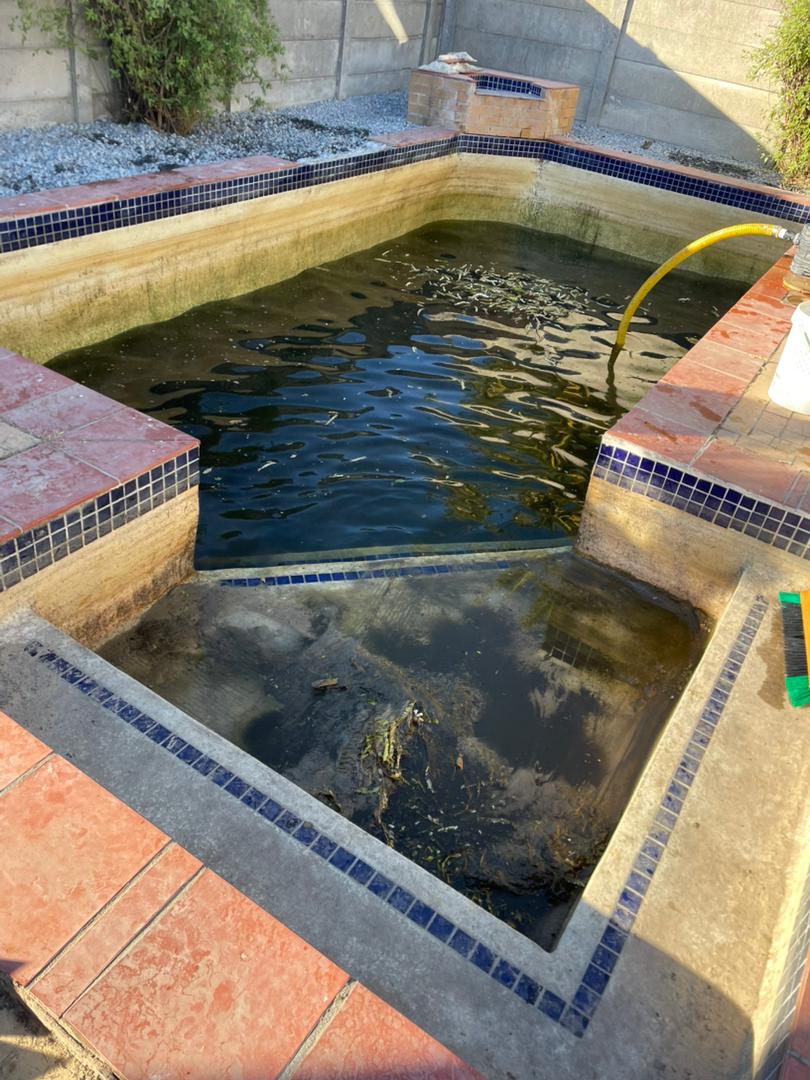
A green pool in a Cape Town heatwave is a race. Warm water and long daylight are rocket fuel for algae, which means a pool that turned overnight is doubling down daily — but the same conditions work for you once the chemistry flips, because heat accelerates the kill too. Speed, therefore, is a sequence problem: do the right things in the right order and most green pools are swimmable inside a week; do them out of order and you will fight the same bloom for a month. Here is the rescue plan we use, day by day.
Before you start: why did it turn?
Thirty seconds of diagnosis saves repeating this whole exercise in February. Pools go green for four reasons: chlorine ran out (holiday, empty floater, failed chlorinator), circulation failed (tripped pump, packed basket, seized motor), filtration failed (exhausted sand, cracked lateral), or the surface itself is so porous that algae re-roots no matter what. The first is a chemistry lapse; the middle two are equipment faults that must be fixed during the rescue or it will not hold; the last is a relining conversation wearing a green disguise.
The day-by-day rescue
Day 1 — physical attack
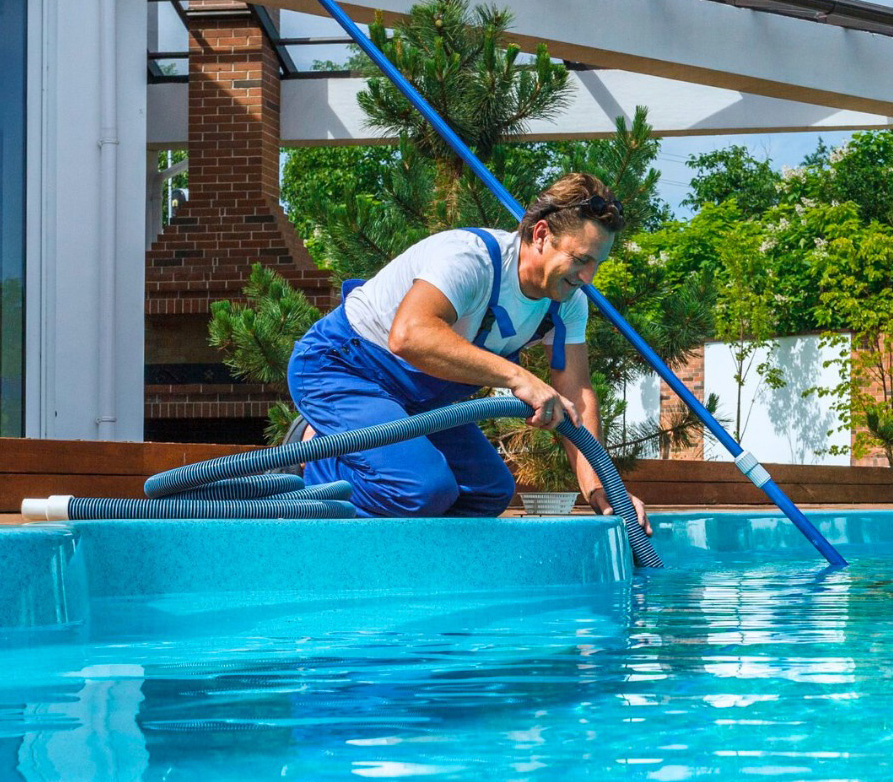
Net out every leaf and solid you can reach; algae feeds on organic matter. Brush every surface hard — walls, floor, steps, waterline — because brushing breaks the biofilm that shields algae from chlorine. Empty both baskets, confirm the pump runs and primes properly, and backwash the filter so it starts the fight clean. Then test pH and correct it to 7.2–7.4 — slightly low, deliberately, because chlorine kills fastest there. Do not shock yet. Shocking into wrong pH wastes half the chemical.
Day 2 — the kill
Shock the pool properly — a genuine shock dose scaled to the green, not a cup of granules — and run the pump continuously. Not on the timer: continuously. Circulation is the delivery system for everything you just added, and 24-hour running through the kill phase is the single biggest speed factor in this whole process. Brush again in the evening.
Days 3–4 — the cloud and the clean-up
Dead algae turns the pool from green to cloudy grey-white — progress, not a setback. Keep the pump running, backwash whenever the gauge climbs 20–25% over baseline (expect this often — the filter is hauling out the corpse), and retest chlorine morning and evening, re-dosing to hold it high until the cloud thins. A flocculant can compress this stage: it clumps fine particles for vacuuming to waste, at the cost of some water and effort.
Day 5 — rebalance and verdict
Water clear or near it: retest everything, settle pH to 7.2–7.6, let chlorine drift back to 1–3 ppm, resume normal timer hours. Water still green despite honest execution? Stop repeating and start diagnosing — something upstream is broken, and it is usually the filter or the surface.
When green will not stay gone
A pool that clears and re-greens within weeks is telling you the rescue treated a symptom. The usual suspects, in the order we find them: an exhausted or channelled sand bed recycling algae back to the pool (see the pressure-rebound test on our filtration repair service); a starved or worn pump moving too little water; stabiliser lock-up from years of stabilised chlorine quietly neutralising your doses; and — the big one in older Cape Town pools — a rough, porous surface where black algae roots survive every chemical assault. That last one is why some pools are green every February regardless of effort, and the honest fix is resurfacing, not more shock. Chronic re-greening plus unexplained water loss? Have a leak check done too — constant dilution sabotages chemistry. If you would rather skip the diagnostics, book a free pool assessment and we will identify why it turned and what will keep it blue.
Frequently asked questions
How fast can a green pool clear, realistically?
Mild green with sound equipment: 3–5 days. Established green: about a week. Black-green swamp: up to two weeks, and worth professional recovery to protect the filter and surface.
Should I drain a green pool instead?
Almost never — recovery is cheaper and safer than draining for anything short of a multi-year swamp, and drain decisions on older shells belong with someone who has inspected them.
Can I swim during the rescue?
Not during the shock phase — wait until chlorine settles back under 3 ppm and you can see the floor clearly.
Why does my pool re-green after every rainstorm?
Storm runoff adds phosphates and debris while diluting chlorine — a double hit. One corrective dose after big rain usually holds a healthy pool; a pool that turns fully green from one storm has thin margins worth investigating.