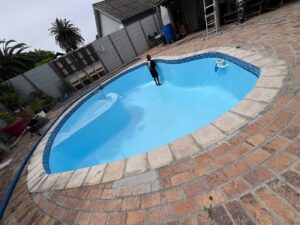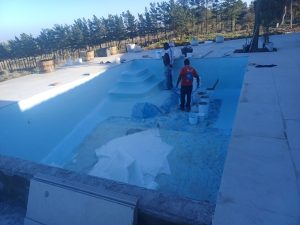
Cape Town’s older suburbs sit on a buried treasure: thousands of gunite and concrete pool shells, hand-placed decades ago, many of them structurally better than anything built today. The surfaces on them fail — that is chemistry and time — but the shells endure, which is why “repair or rip out?” almost always answers itself in favour of repair. This is the owner’s guide to gunite pool repair: what cracks mean, what resurfacing options exist, and how the decisions actually get made.
Why old gunite shells are worth saving
Gunite — concrete sprayed over a steel reinforcing cage — was typically over-engineered in the 60s–90s: thick walls, generous steel, poured by crews doing nothing else. A shell like that, even wearing a terrible surface, is an asset. Full replacement costs multiples of restoration; restoration — surface, plumbing, equipment — delivers a functionally new pool on bones that have already proven fifty years of ground movement. Our published Panorama case study is exactly this story: an aged gunite shell, restored with a fibreglass lining rather than demolished.
Reading cracks like a professional
Crack triage:
- Surface crazing (fine spider-webbing): cosmetic — the finish, not the shell. Resurfacing cures it
- Hairline + weeping (dye test pulls in): a leak path — repairable with proper routing and bonding
- Structural (wide, stepped, or moving seasonally): rare and serious — needs professional evaluation before ANY resurfacing money is spent
Your resurfacing options on a sound shell
- Fresh marbelite: the classic mineral finish — cost-effective, beautiful, 10–20 year lifespan with good water care. Colour choices covered in our marbelite colours guide;
- Fibreglass lining over gunite: the modern conversion — smoother, chemically gentler, and it adds a waterproofing layer old shells appreciate; the process is documented start-to-finish in our relining service and case studies (8m x 4m benchmark: R54,000–R60,000, published);
- Repair + partial resurface: honest only for localised damage on a young surface — a patchwork over a generally failing finish wastes money in slow motion.
What a proper gunite restoration includes
The sequence separates real jobs from quick ones: strip the failed surface to sound substrate; rout and bond-repair every crack (not paint over them); address the classic old-shell leak points — weir throat, light niche, fitting penetrations — while everything is open; then prime, fair and apply the new surface with proper curing time. This is also the economical moment for everything else: new weir, LED lights, returns, even coping — combining them into one empty-pool window costs far less than four separate projects, which is how we quote it after a free assessment.
Owning an old gunite pool well
- Respect the empty shell: old pools should not stand drained casually — groundwater pressure is real; draining belongs inside planned work;
- Balance the water: chronic low pH is what dissolved the old marbelite — do not feed the new surface to the same chemistry;
- Watch the waterline and weir corners each season — early weeping caught at R2,000 beats paving repairs at R20,000; our leak detection exists for exactly that call;
- Restore once, properly — the shell will outlive the work either way; the question is only how many times you pay for the surface.
Frequently asked questions
How do I know if my pool is gunite or something else?
Age and shape are good clues — free-form pools from before the 2000s are almost always gunite/concrete; a solid knock and visible thickness at fittings confirm it. We identify construction as part of any assessment.
Are cracks in a 50-year-old pool an emergency?
Usually not — most are finish crazing or repairable weeps. The rare structural crack announces itself with width and movement; that one, evaluate before anything else.
Marbelite again or convert to fibreglass?
Sound, dry shell and love of the classic look: marbelite. History of weeping, porous old concrete, or wanting lower chemical appetite: fibreglass conversion. We quote both with real numbers and let you choose.
Can you enlarge or reshape a gunite pool during restoration?
Structurally possible — steps softened, floors reshaped, depths altered — but it moves the project into construction territory. Worth pricing while the shell is open if you have ever wanted the change.