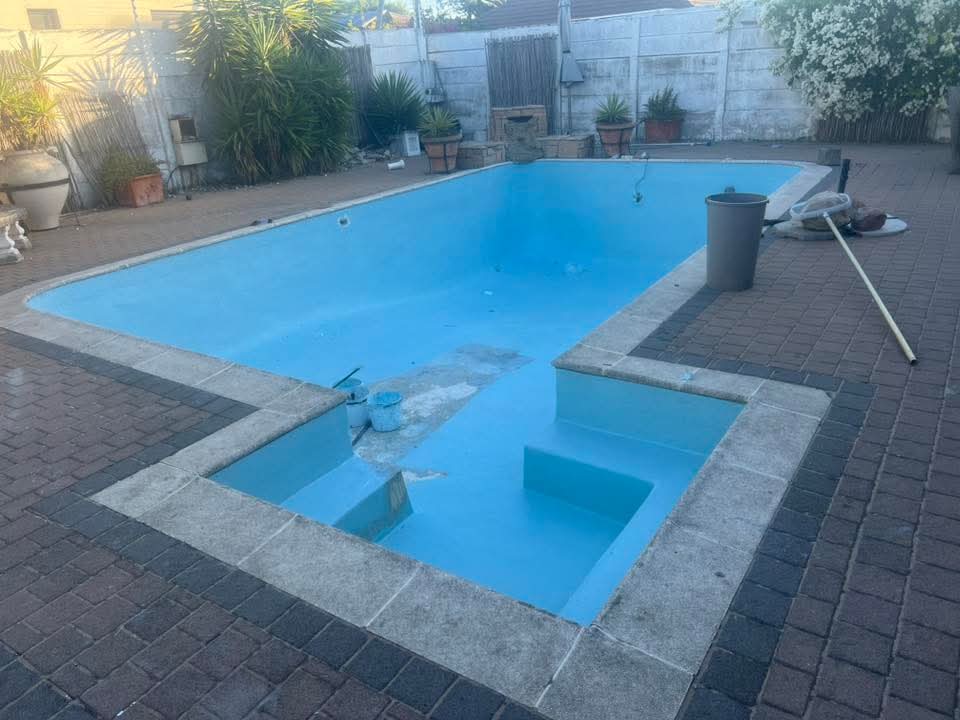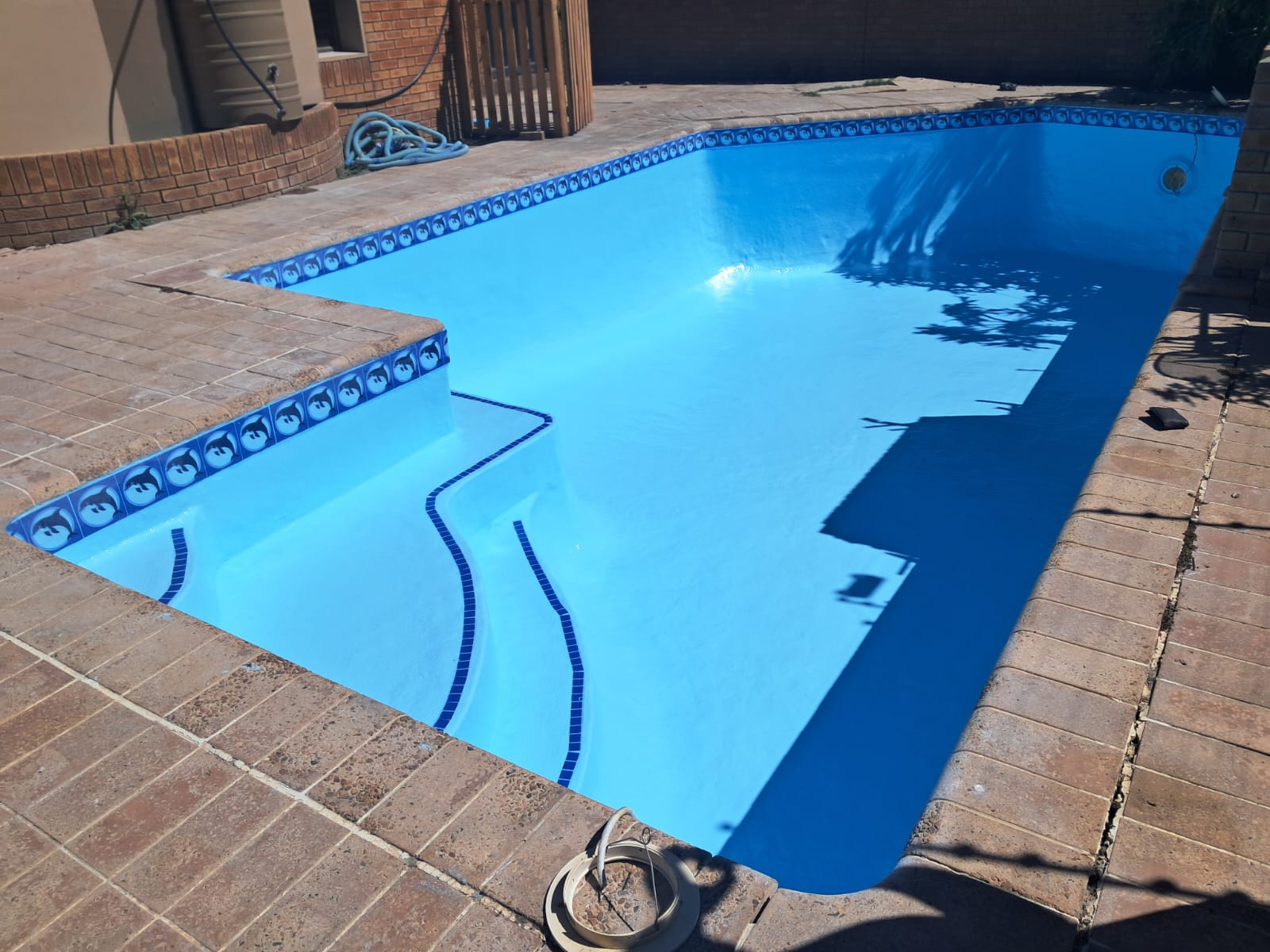
This is a real pool relining Cape Farms project we wrapped up recently: an 8m x 4m gunite pool that had been quietly losing water for months, with cracked marbelite and a surface rough enough to scrape a swimmer’s feet. The owner was tired of topping the pool up every week and fighting the algae that kept taking hold in the failing plaster. Here is exactly what the job involved, what it cost, and why a full fibreglass lining was the right fix for this particular shell.
Key Takeaways
- The pool: an 8m x 4m gunite shell in Cape Farms with cracked marbelite, active leaks and a rough, algae-prone surface.
- The fix: strip the failed marbelite back to solid gunite, seal and reinforce the cracks, then bond a full fibreglass lining finished in a smooth aqua flowcoat.
- The price: R54,000–R60,000 all-in for a pool this size, with the range driven by shell condition, crack repairs and access.
- The result: a waterproof, algae-resistant surface that should hold up for 15 to 20 years before it needs attention again.
What This Pool Relining Cape Farms Job Involved
When the client first called, the symptoms were the classic signs of a shell at the end of its life. The water level kept dropping no matter how often it was topped up, the walls felt gritty underfoot, and dark algae streaks kept returning within days of every clean. A leaking, rough pool is not just annoying — it pushes up your water bill, your chemical bill and your pump’s working hours all at once, so the longer it is left the more it quietly costs.
The starting condition: a leaking gunite shell
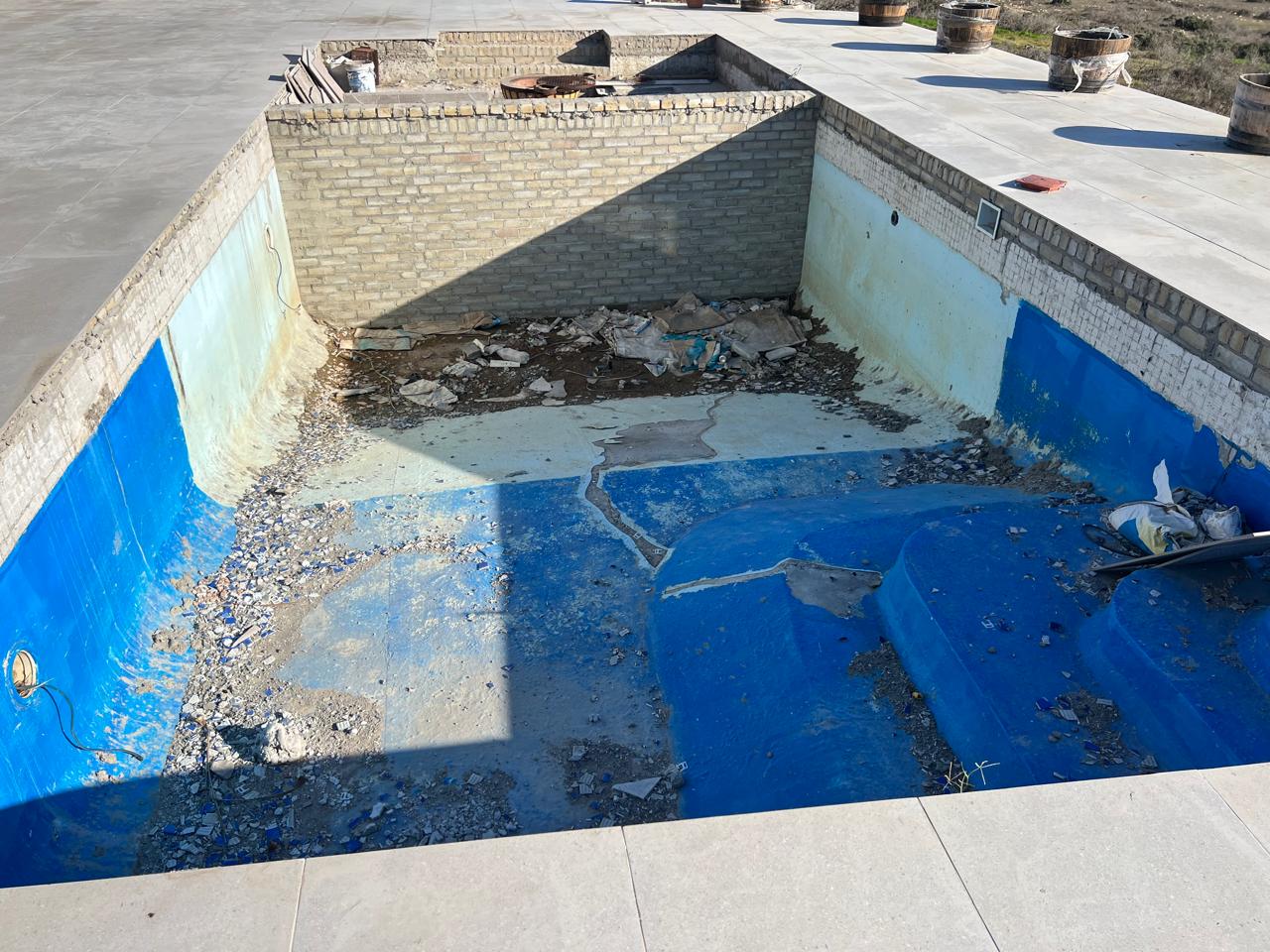
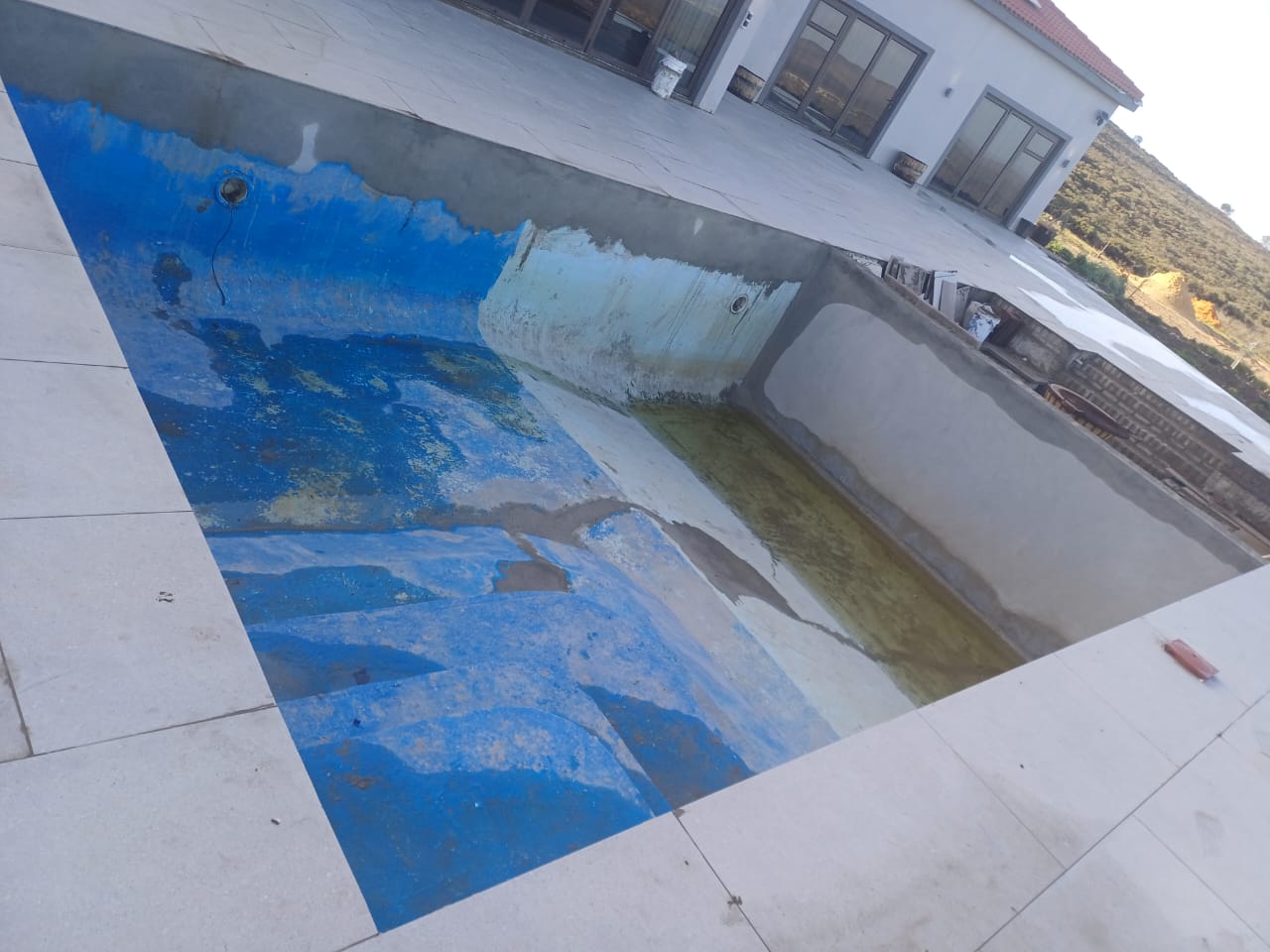
The shell itself was sound gunite, but the marbelite layer over it had broken down badly. Sections had lifted clean off the wall, hairline cracks had opened into proper leak paths, and the old blue finish had faded into a patchy, chalky surface. You can see in the before photos how much of the original plaster had already failed and how little of the smooth finish was left to work with.
Why the marbelite had failed
Marbelite is a cement-based finish, and like any plaster it has a lifespan — typically ten to fifteen years in our climate before it starts to chalk, crack and delaminate. Once water gets behind it through a crack, the problem accelerates: the layer lifts, more water gets in, and the surface roughens into the perfect home for algae. At that point patching is a short-term band-aid, which is why we recommended a full reline rather than another round of repairs.
The Relining Process, Step by Step
Relining is not a cosmetic resurface — it is a structural rebuild of the waterproof layer. Each stage matters, because the finish is only ever as good as the preparation underneath it. Here is how we worked through this particular pool from drained shell to swim-ready.
Stripping back to solid gunite
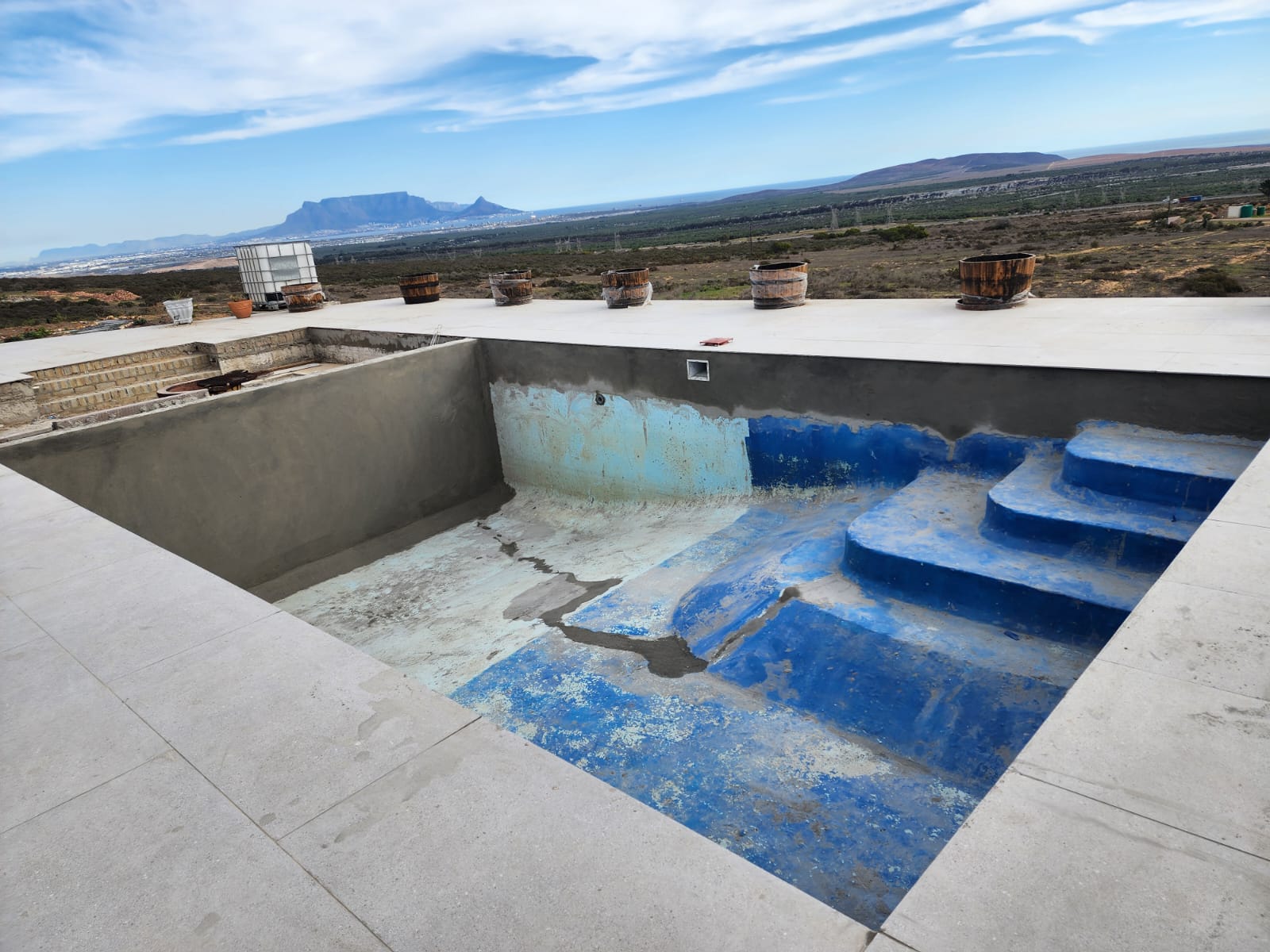
The first job was to remove every bit of failed marbelite until we reached sound, solid gunite. This is the messy, unglamorous part, but it is the step most shortcuts get taken on — and the one that decides whether the new lining bonds properly or lifts again in a season. We stripped the whole shell back, cleaned it down and inspected every square metre before going any further.
Sealing cracks and reinforcing the shell
With the shell exposed we sealed each crack and reinforced the weaker sections so the structure was watertight and stable before any lining went on. This is also the stage that most affects the final price: a shell with a couple of minor cracks needs far less work than one with deep structural movement, which is exactly why we inspect first and quote second.
Bonding the fibreglass lining and aqua flowcoat finish
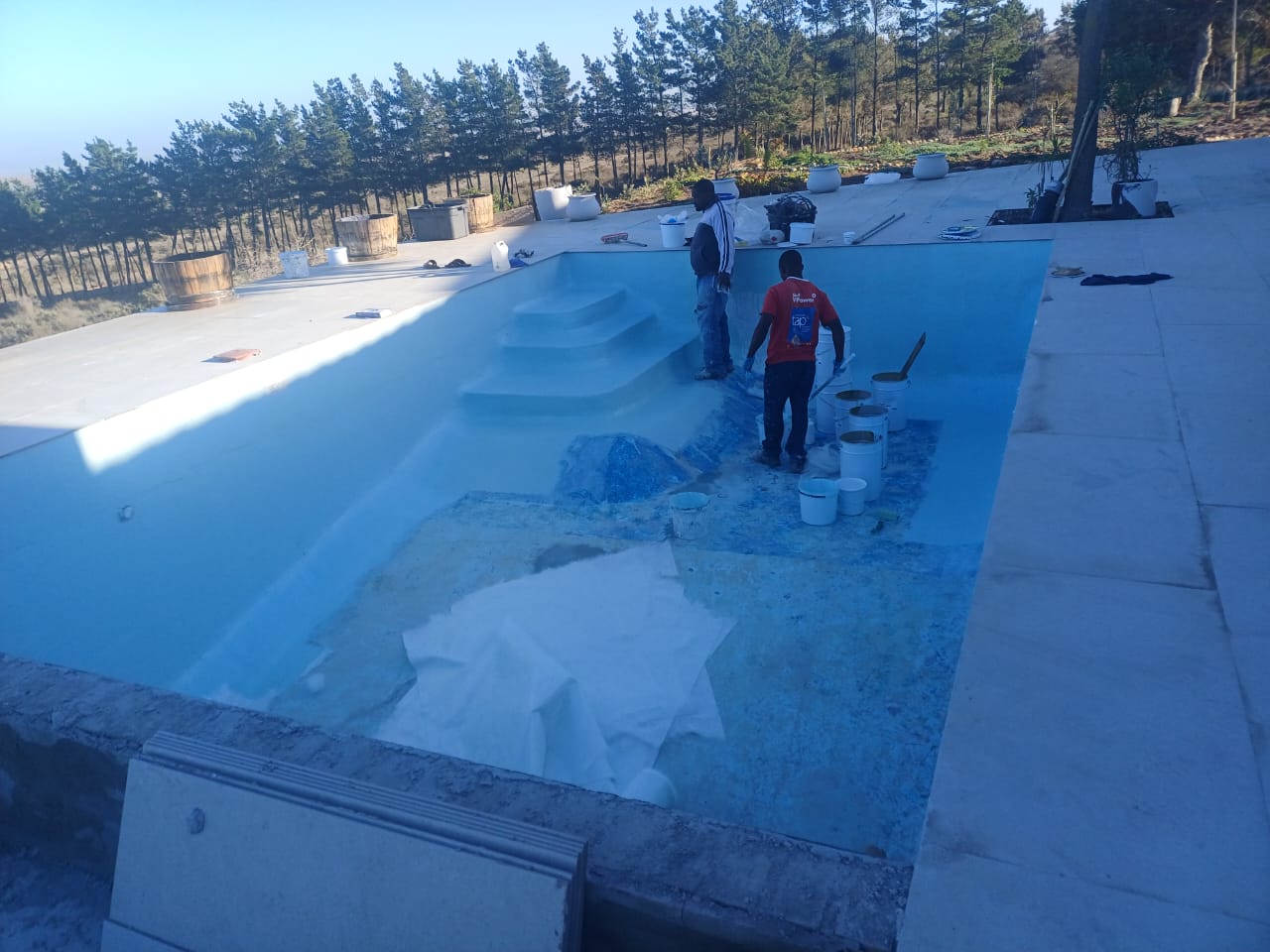
Once the shell was prepped, we bonded a full fibreglass lining directly to the gunite and topped it with a smooth aqua flowcoat. Fibreglass flexes slightly with the shell instead of cracking against it, and the flowcoat gives a non-porous, algae-resistant surface that is far easier to keep clean than old marbelite ever was. The difference in feel underfoot is immediate.
What Pool Relining Cape Farms Costs
For an 8m x 4m pool like this one, the all-in price landed in the R54,000–R60,000 range. That figure covers the full job — prep, crack repairs, the complete fibreglass lining, the finish coat and site cleanup — with no hidden extras added afterwards. The table below breaks down what is included so you can see exactly where the money goes.
| Stage | What’s included | Cost impact |
|---|---|---|
| Strip-out & prep | Removing all failed marbelite back to solid gunite | Included |
| Crack & structural repairs | Sealing cracks and reinforcing weak sections | Main variable |
| Fibreglass lining | Full fibreglass layer bonded to the shell | Included |
| Aqua flowcoat finish | Smooth, algae-resistant top coat | Included |
| Site cleanup | Work area cleared on completion | Included |
| Total — 8m x 4m | All-in, no hidden costs | R54,000–R60,000 |
Why we quote a price range, not a flat figure
Every pool relining Cape Farms quote we give starts with an inspection, because no two shells are in the same condition. A 32m² pool with a few minor cracks sits at the lower end of the range, while one needing serious structural repair sits at the top. We would rather look at the shell, work out exactly what it needs and hand you a fixed price before we start than surprise you with extras halfway through the job.
The Finished Pool
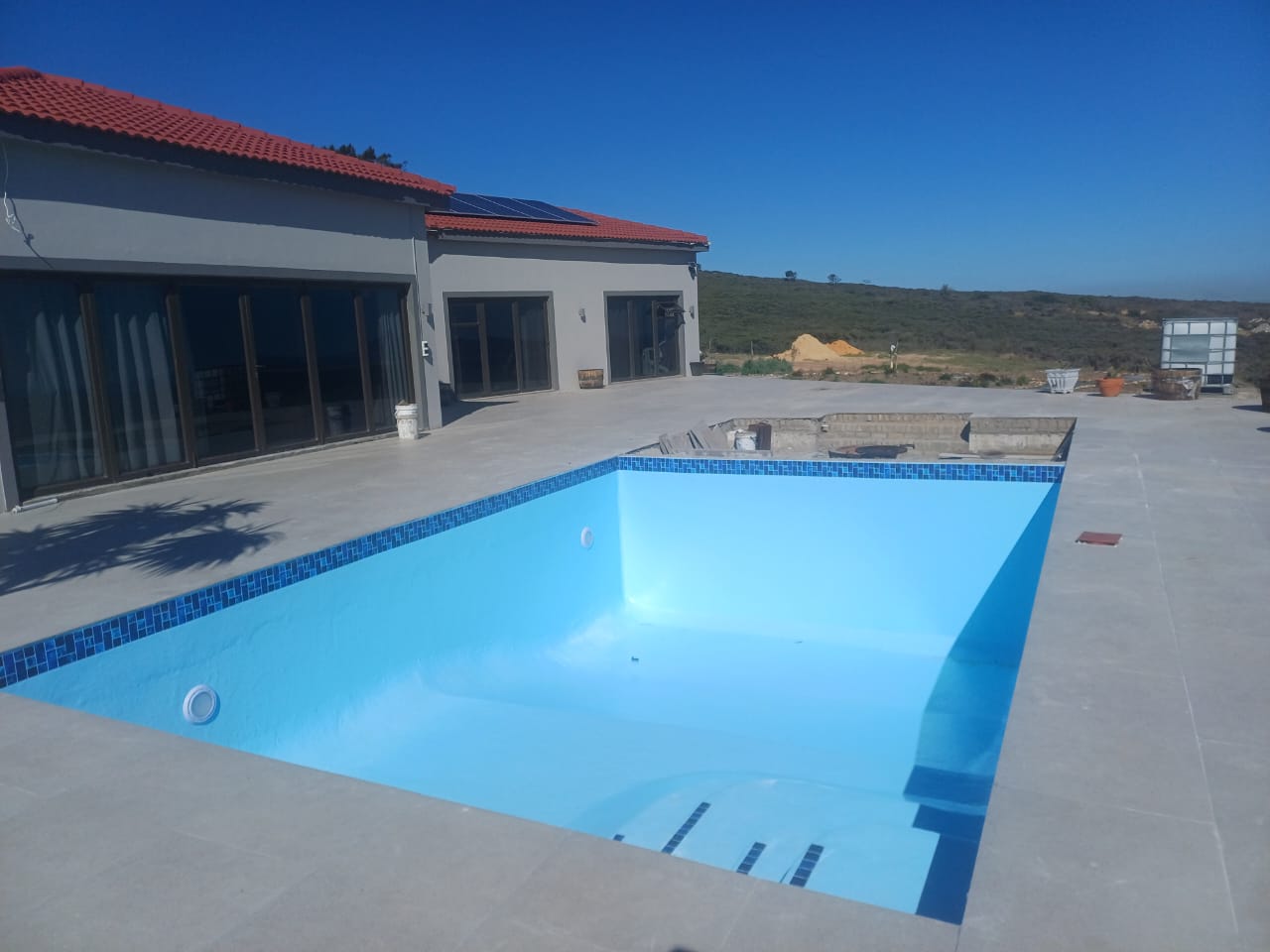
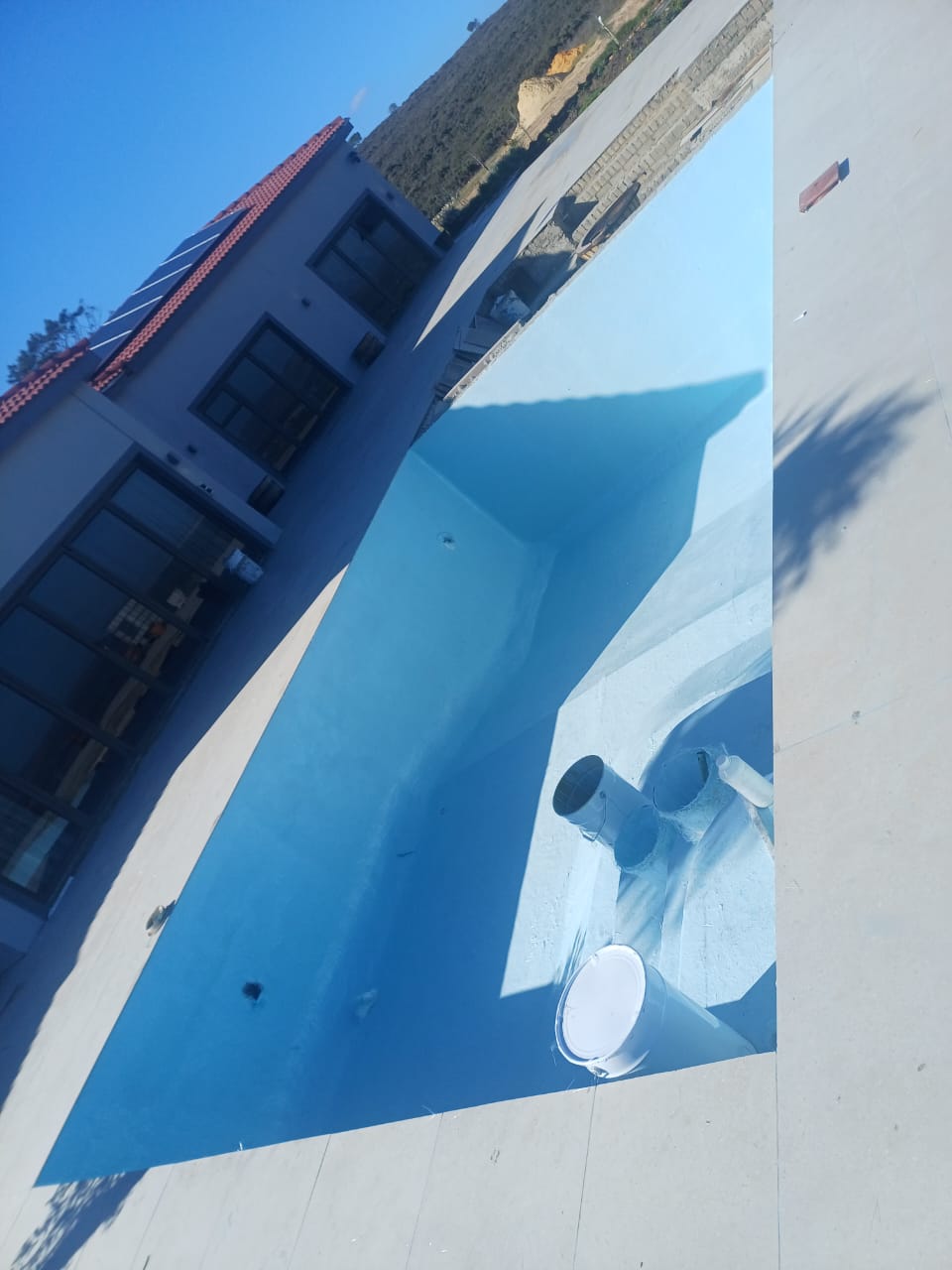
The end result speaks for itself. The same shell that was cracked, leaking and patchy now has a smooth, even aqua finish and a crisp mosaic border, and it holds water the way it should. The owner went from refilling every week to a pool that simply works — and the new surface will stay easier to clean for as long as it lasts.
What you get for 15 to 20 years
A properly bonded fibreglass lining like this should give 15 to 20 years of service before it needs attention again. Over that lifespan it saves money in three quiet ways: far less water lost to leaks, fewer chemicals fighting algae on a non-porous surface, and less pump runtime keeping a sealed pool balanced. Spread across two decades, a reline like this usually works out cheaper than years of patch-and-pray repairs.
Get a Fixed Quote for Your Pool
If your pool is showing the same symptoms — dropping water level, rough walls or stubborn algae — the fix is almost always the same as this Cape Farms job. We cover the wider area too, so whether you are after pool installations in Durbanville, pool work in Brackenfell, or pool repairs nearby, we can help. Browse our full range of pool services, then send your pool’s length x width plus a photo through our free quote page and we will come back with a fixed price.
See a different angle in our Monte Vista pool relining case study, where we stripped out failed old fibreglass and relined the shell properly.
See a full backyard transformation in our Kraaifontein reline and paving project, where we relined the pool and laid new paving in one job.
Frequently Asked Questions
How long does a pool reline take?
For a standard 8m x 4m pool, a full reline usually takes a few working days from drain to finish, depending on the weather and how much crack repair the shell needs before lining.
Is fibreglass better than marbelite?
For longevity and maintenance, yes. Fibreglass is non-porous and flexes with the shell, so it resists algae and cracking far better than cement-based marbelite, which is why it typically lasts 15 to 20 years.
How much does pool relining in Cape Farms cost?
For an 8m x 4m pool, expect R54,000 to R60,000 all-in. The exact figure depends on the shell’s condition, how much crack repair is needed and site access, which we confirm with an inspection first.
Do you reline pools outside Cape Farms?
Yes. We work across the Northern Suburbs and greater Cape Town, including Durbanville, Brackenfell, Bellville and surrounding areas. Send us your pool size and a photo for a fixed quote.