
Marbelite pool resurfacing, done the slow right way
Half of Cape Town swims on marbelite — the classic mineral finish that made South African pools look the way they do. It is beautiful, proven and mortal: fifteen-odd years of sun and chemistry and it goes rough, stained and thirsty, and no chemical routine brings it back. Marbelite pool resurfacing is the reset — and it is a craft job where the preparation you cannot see decides everything you can. That is the part we photograph, price and put in writing.
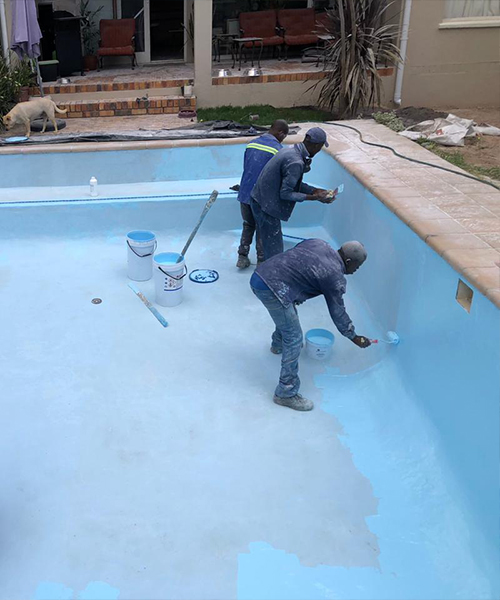
Is your marbelite due? The four signs:
- Sandpaper-rough walls that scuff feet and costumes
- Stains and black algae that return to the same spots every summer
- Chemical appetite climbing season after season
- Crazing, chips or bare patches showing the shell underneath
Two or more? Book the free assessment or call 069 955 1310.
What proper marbelite resurfacing involves
- Strip: the failed surface comes off to sound substrate — skimming new marbelite over old failure is how three-year surfaces happen;
- Repair: cracks routed and bonded, hollow spots re-screeded, weir throat and fittings re-sealed while everything is open;
- Prep and prime: the keyed, primed substrate that new marbelite actually bonds to;
- Apply: hand-floated by people who do nothing else — thickness even, corners tight, finish burnished;
- Cure and balance: marbelite cures chemically for weeks; we hand over with the water balanced and the curing instructions in writing, because early neglect marks a new surface permanently.
Choosing your marbelite colour
White for the classic sparkle, sky blue for the richer water tone (the most requested), mid-blues and greys for depth, charcoal for drama — each ages differently in our sun and water, and dark finishes demand disciplined balance. We bring physical samples to every quote; the full ageing-honest guide is in our marbelite colours article.
Marbelite or fibreglass? The honest fork
Resurfacing time is decision time, and we quote both without pushing either. Fresh marbelite: the classic look and feel, cost-effective on a sound, dry shell. Fibreglass conversion: smoother, chemically gentler, and it adds waterproofing insurance older or weep-prone shells appreciate — the route our published relining projects document, with real prices attached (8m x 4m benchmark R54 000 – R60 000). Shell condition usually makes the choice obvious; the assessment tells you which pool you own.
Resurfacing across Cape Town
Marbelite work fills our diary from the northern suburbs’ original family pools (Bellville, Parow, Goodwood) to the leafy southern suburbs’ older shells (Rondebosch, Wynberg) — winter being the professional’s season: empty-pool weeks that cost no swimming, and curing schedules planned around the fronts.
Frequently asked questions
What does marbelite resurfacing cost in Cape Town?
Priced per pool on size and condition, itemised in writing after the free assessment — with our published relining benchmarks as your sanity check for the market.
How long does new marbelite last?
Ten to twenty years, decided mostly by water balance and fill water — the care habits in our handover sheet are what buy the second decade.
Can you resurface over black algae?
We resurface after removing it with the failed surface — that is the point: rooted algae dies with the layer it lives in, which no chemical achieves.
How long is the pool out of action?
Typically two to three weeks including cure, weather depending — another argument for winter scheduling.