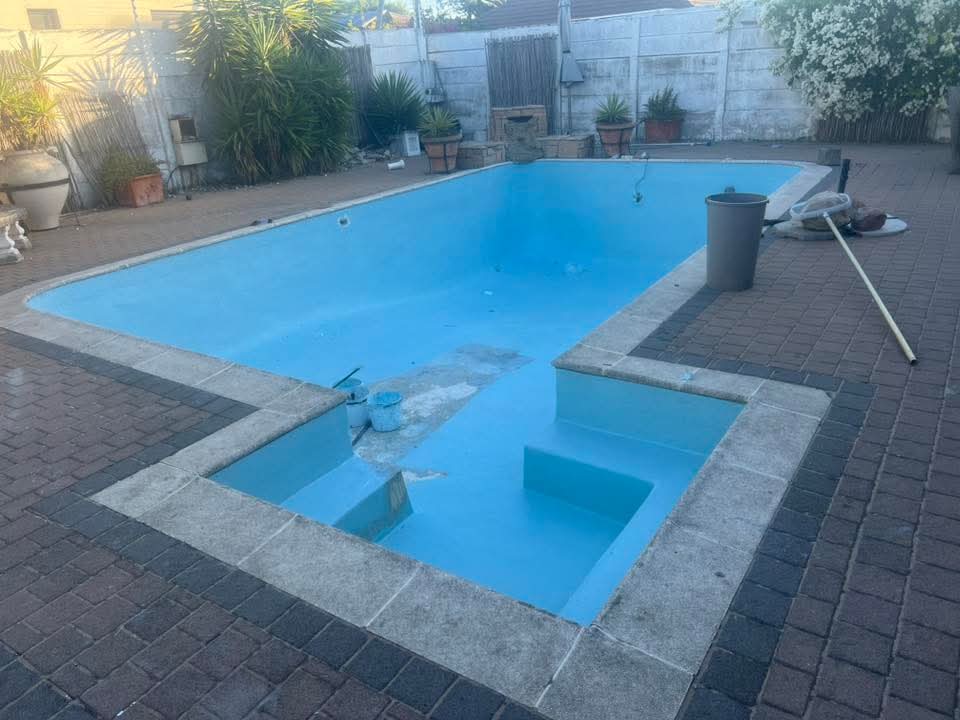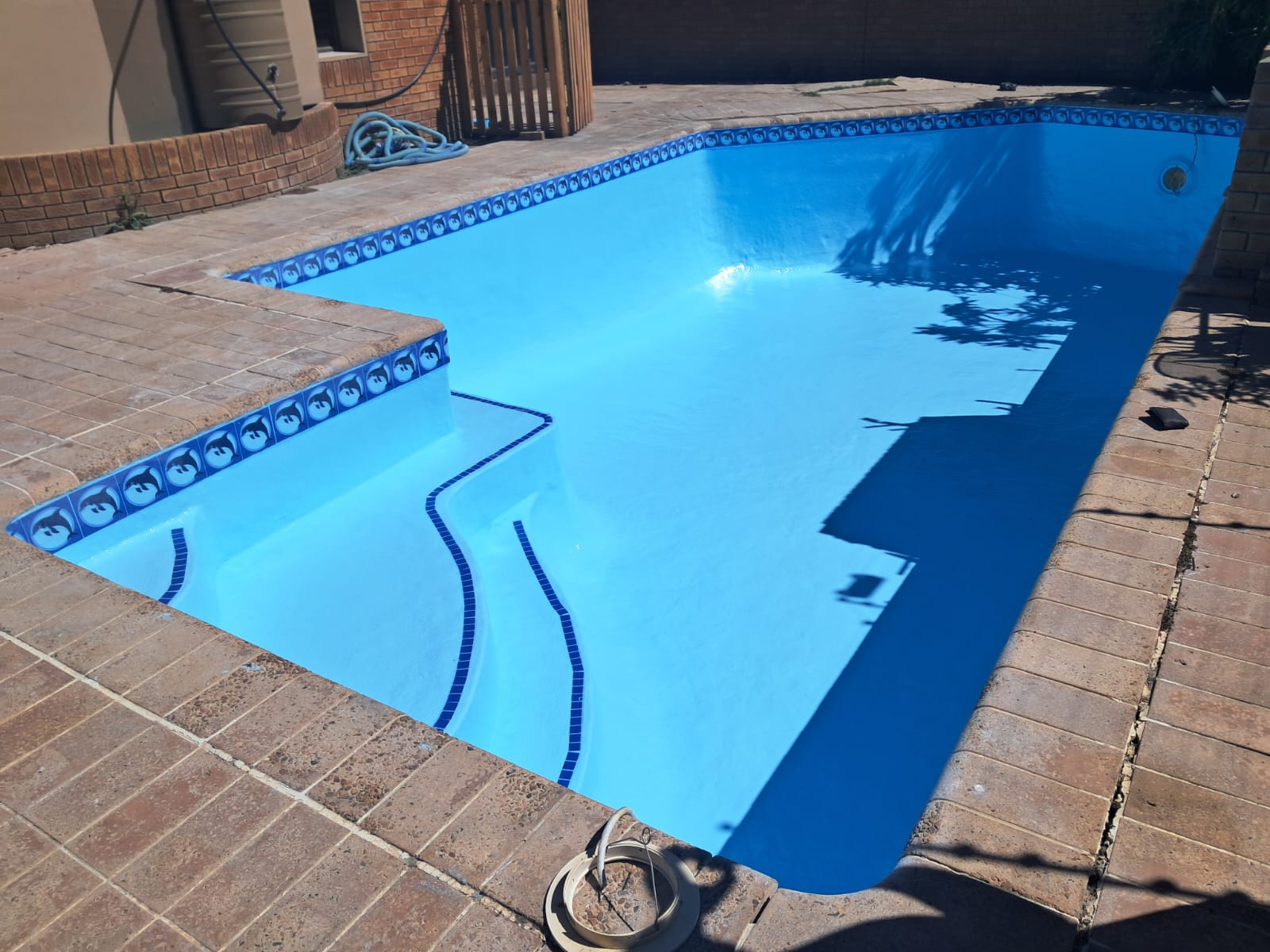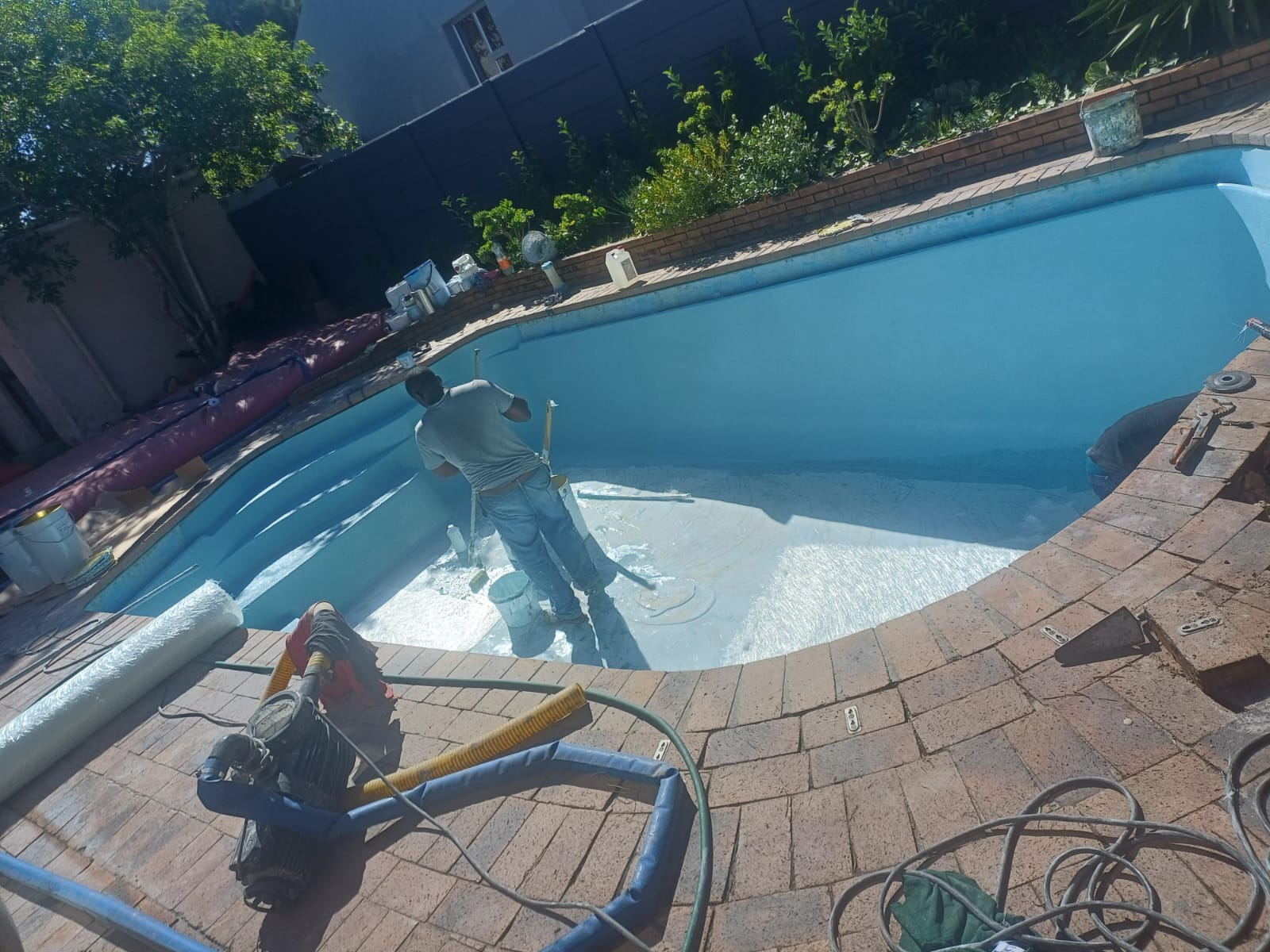
Choose a marbelite colour and you are choosing what your pool will look like for the next fifteen years — not just on day one, but at year ten, when the finish has weathered a decade of sun and chemistry. As a team that resurfaces pools across Cape Town, we have seen every colour age. Here is the guidance we give clients standing over the sample boards.
How marbelite colours actually behave
- White: the classic. Water reads brilliant light blue, debris shows early (which disciplined owners like), and wear stays subtle because there is no dark pigment to fade unevenly.
- Sky blue and light blues: the most popular request — a richer water colour than white with nearly the same forgiving ageing. Sky blue marbelite carries a modest price premium over white.
- Mid-blues and greys: deeper water tones, modern look, still reasonable to maintain. Greys read sophisticated but show calcium scale sooner in hard water.
- Charcoal and black: dramatic, warm (dark surfaces absorb real heat), photograph beautifully — and the least forgiving: scale, brush-marks and uneven UV fade all show. They demand disciplined water balance.
Choosing a marbelite colour — the 3 questions we ask:
- How disciplined is the water care, honestly? (Dark forgives nothing)
- Hard or borehole fill water? (Scale shows on dark finishes)
- Sun exposure — full afternoon sun fades dark pigment unevenly over years
Marbelite prices: what moves the number
Resurfacing is priced per pool, not per bag — but for orientation: raw marbelite arrives in 40kg bags in the low-hundreds of rand each, with coloured mixes (sky blue especially) above plain white; a family pool uses many bags; and the real cost is the preparation and skilled application, which is exactly as it should be — a marbelite finish is only as good as the surface under it and the hand that floats it. Our published relining case studies show what honest surface work costs; every resurfacing quote we issue is itemised in writing after a free assessment of your existing shell.
Marbelite or fibreglass? The colour angle
Colour choice is also a materials choice. Marbelite gives the classic mineral texture and colour depth; fibreglass linings deliver flatter, more uniform colour with a smoother feel and stronger waterproofing on older shells. Plenty of Cape Town pools convert from tired marbelite to fibreglass at resurfacing time — and plenty stay marbelite for the look. Our pool relining page covers the trade-offs properly, and we bring physical samples of both to quotes.
Making any colour last
- Balance the water from day one — new marbelite cures chemically for weeks and early neglect marks it permanently;
- Brush regularly in the first month and season — it polishes the finish and denies algae a first foothold;
- Manage fill water — borehole metals stain any colour, dark ones fastest;
- Fix small chips early — a rand-coin chip today is a spreading patch in two winters.
Frequently asked questions
Which marbelite colour hides dirt best?
Mid-blues and greys hide day-to-day debris best. White shows everything — which many owners consider a feature, not a flaw.
Does dark marbelite really warm the pool?
Measurably, yes — dark finishes absorb sun and can add a couple of degrees. It is the honest upside that offsets their higher-maintenance nature.
Can you match my existing colour for a partial repair?
Approximately at best — weathered finish never matches fresh mix exactly. Small repairs aim for close; only full resurfacing gives a uniform colour.
How long does a marbelite finish last?
Ten to twenty years depending on water care and fill water. When yours goes rough, stained and thirsty for chlorine, the end is near — and resurfacing resets the clock.