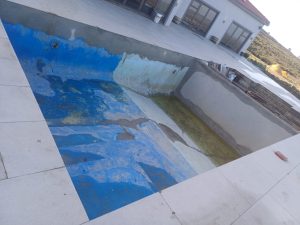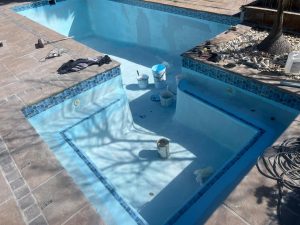
The party is Saturday. The pool went green on Wednesday. And so the internet’s most-typed pool question gets typed once more: how to clear a green pool overnight. Here is the truthful answer from people who rescue green pools for a living: overnight is possible for light green, ambitious for proper green, and a lie for swamp — but there IS a fast-track that compresses days into hours, and it is worth knowing before the weekend deadline hits.
What decides the speed


- How established the bloom is: a two-day tint dies overnight; a two-week soup does not;
- Your filtration: the filter is the machine that removes dead algae — a strong system clears in a day what a tired one drags out for a week;
- Whether your chlorine works at all: if stabiliser lock-up or phosphates are in play, no amount of overnight effort wins — see our high-chlorine-still-green guide if this sounds familiar.
The overnight protocol (light-to-medium green)
- Afternoon: brush every surface hard — walls, floor, steps. Empty every basket. Backwash a loaded filter so it starts clean;
- pH first: correct to 7.2 — chlorine kills fastest slightly low; skipping this wastes half your shock;
- Sunset: shock properly — a real dose scaled to volume and severity, dosed at dusk so UV does not eat it while it works;
- All night: pump runs continuously — circulation is non-negotiable; overnight is exactly when the kill happens;
- Dawn: expect blue-grey cloudy water — the algae is dead and suspended. Now the filter (or the flocc below) finishes the job.
The flocculant fast-track: when you need swimmable-by-tomorrow, flocculant clumps the dead cloud into heavy sediment overnight; in the morning you vacuum it TO WASTE (not through the filter), top up, and the pool is clear by afternoon. It costs some water and an hour of careful vacuuming — it is the closest thing to a legitimate overnight miracle.
What will NOT clear a green pool overnight
- Algaecide alone — support chemistry, not a shock substitute (our algaecide guide explains where it fits);
- “Miracle” clarifier doses — clarifiers polish nearly-clear water; they do not kill anything;
- Draining — slower than recovery, wasteful, and genuinely risky on older shells;
- Doubling the shock without brushing — biofilm shields algae; the brush is half the kill.
Sunday-night truths
If the overnight attempt fails, the pool is telling you something: blooms that shrug off a proper shock almost always sit on a broken system — exhausted sand, a worn pump, locked-up stabiliser, or a porous surface where algae roots survive everything (the chronic case that ends at our relining service). One honest free assessment beats a season of weekend rescues — and if the deadline is real and the pool matters, our repair team does professional recoveries with the industrial version of everything above.
Frequently asked questions
Can I swim in a pool that was green yesterday?
Once it is visibly clear, chlorine has settled under 3 ppm and you can see the floor — yes. Cloudy water is a no: it hides both chemistry and swimmers.
How much shock for a green pool?
Multiples of a maintenance dose — scaled to volume and how green. One correctly sized shock beats four hopeful sprinkles on both speed and cost.
Floc or filter — which finish is better?
Time-critical: floc and vacuum to waste. No deadline: let a healthy filter clear it over a day or two with regular backwashing. Both end in the same blue.
Why does my pool go green every few weeks?
Recurring green is never bad luck — it is filtration, chemistry lock-up, phosphate load or a finished surface. Diagnose once, fix once.
Want it handled? Our Cape Town pool cleaning service clears green pools properly – and when the surface itself is the problem, a relining fixes it for good.